
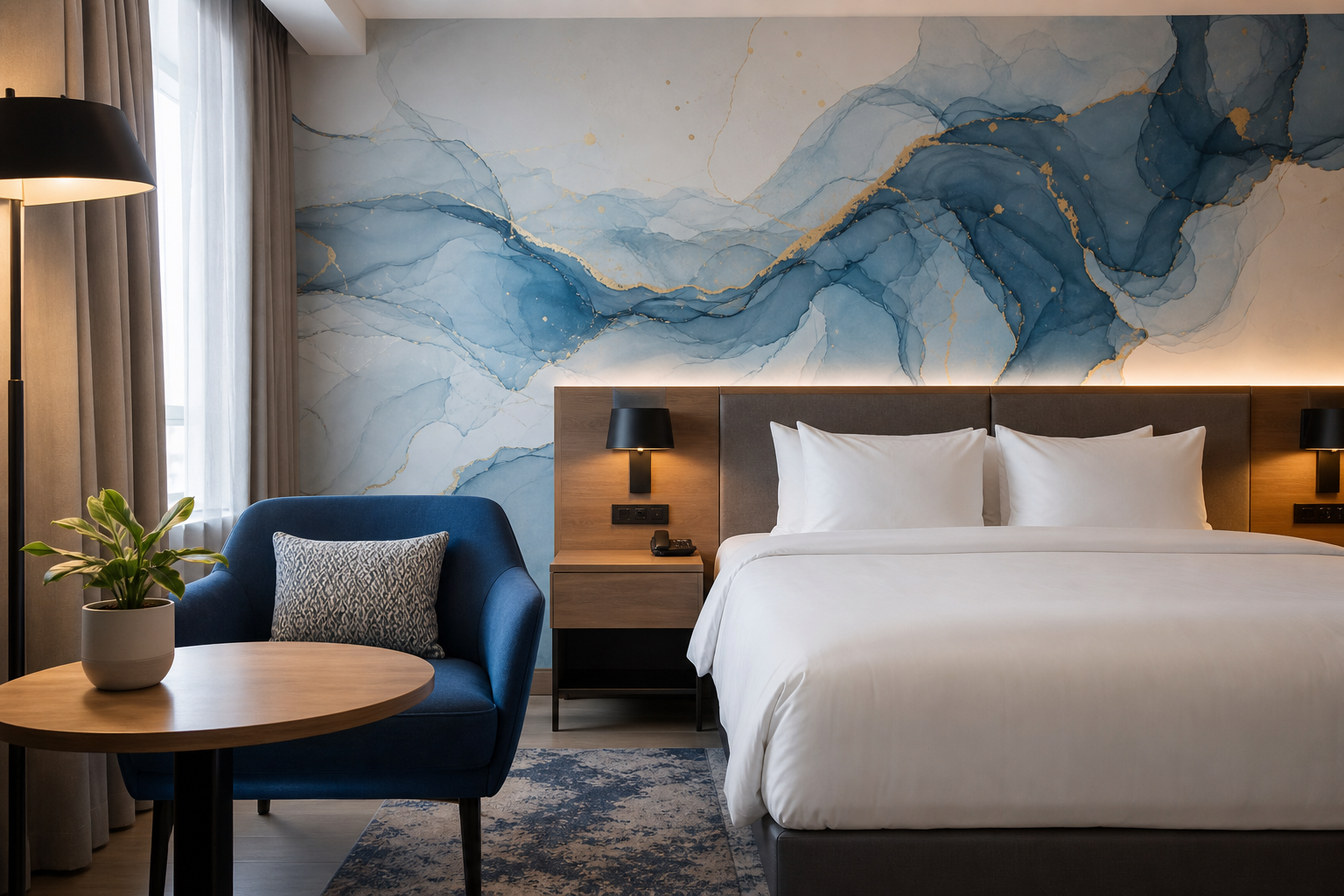
What hotel teams must decide about feature wall graphics?
Procurement-ready checklist for hotel teams to specify and approve feature wall graphics: zones, fire rating, durability, mockups, mockups, and installation.
What this checklist covers and how to use it
This checklist is written for hotel design managers, procurement leads, operations managers, and hospitality interior designers who must specify, compare, and approve feature wall graphics for guestrooms, lobbies, corridors, and public spaces. Use each section to build a supplier-ready brief or RFQ. When you finish, you should have a site map of target walls, the technical evidence you need from vendors, a visual approval workflow, installation responsibilities, and a maintenance and replacement record.
For an industry example of a specification checklist that maps rooms, quantities, and supplier-ready details, see MontCarta's hotel wall art checklist which shows how to make procurement and installation straightforward.
Step 1: define scope, zones, and quantities
Start by surveying the property and recording the following for every wall you plan to finish. Use consistent naming and record the photos and measurements so future reorders match the original installation.
- Wall ID and location, for example GR-201 headboard wall, Lobby West, Corridor Level 3.
- Finished usable zone: width, height, orientation, centerline, and the relationship to headboards and furniture.
- Guest viewing points and sightlines, including standing and seated positions.
- Clearances for lighting, HVAC diffusers, switches, and artwork frames.
- Quantity rules by room type, for example one feature wall per standard room and three for suites.
- Preferred size standards to simplify future replacement across properties, and acceptable tolerance limits for each wall.
Standardizing sizes and naming conventions reduces cost and speeds reorders across multiple properties, an approach recommended for multiroom programs in hotel procurement literature.
Step 2: technical must-haves to specify and verify
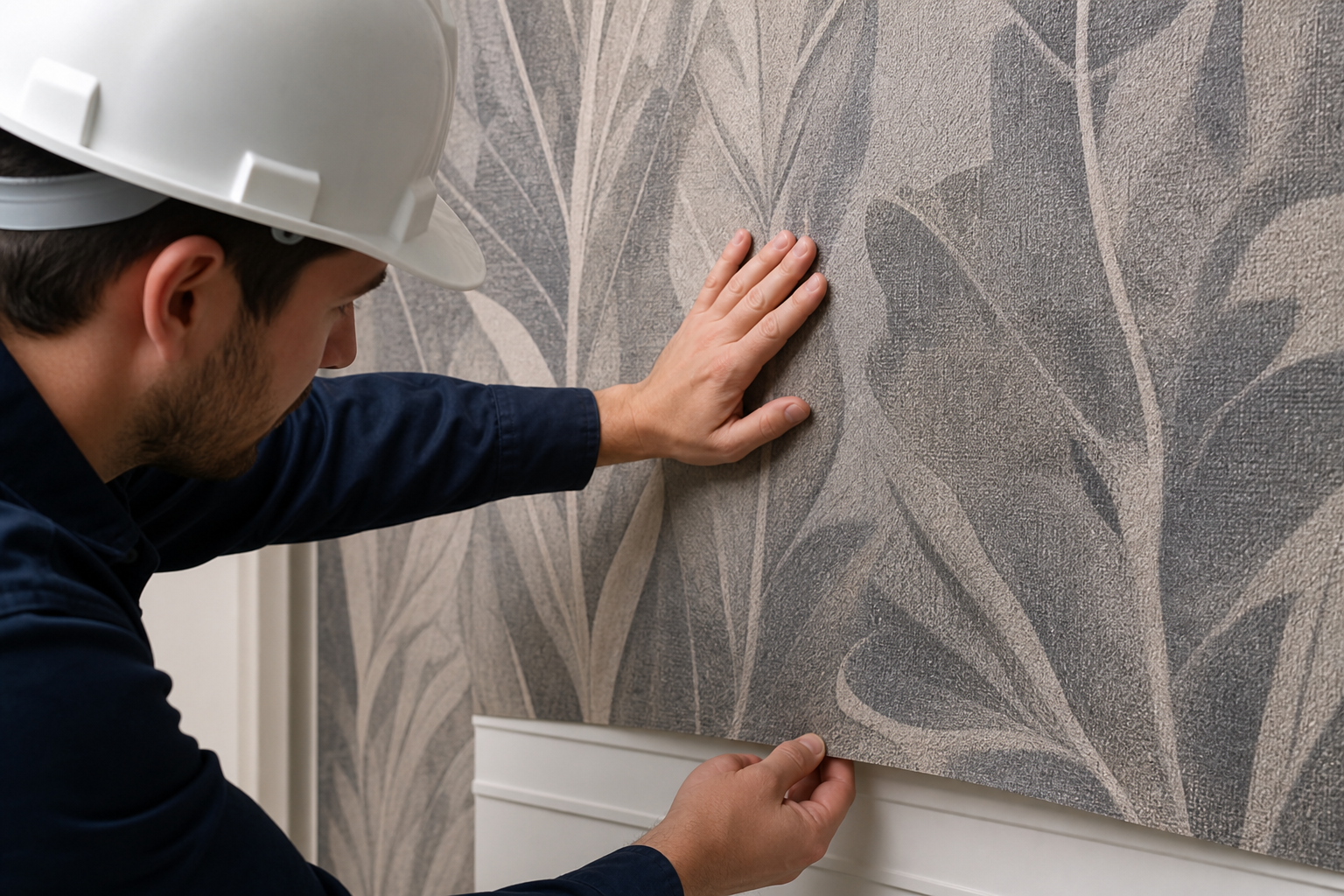
For commercial hospitality installs, specify the product evidence vendors must supply. When choosing between printed wallcoverings and direct-to-surface solutions, your decision should weigh fire rating, durability, cleanability, emissions, and lead time. Applied Coverings advises that fire certification, durability classification, cleanability, VOC compliance, and lead time tend to control the procurement decision for commercial wallcovering projects.
Ask every vendor to include these items in their quote.
- Fire rating and certification data sheet for the finished product and any protective finishes.
- Durability measures such as abrasion or rub resistance and test reports when available.
- Recommended cleaning agents and approved maintenance procedures for the finish.
- Material safety data sheet and VOC emission information for adhesives, primers, and inks.
- Warranty terms, including acceptable causes for failure and response times for repairs.
Durability matters in high-traffic hotel areas. Protective finishing and verified cleaning protocols extend the life of installed artwork, as discussed in hospitality durability guidance from industry sources.
Step 3: visual approvals, mockups, and scale checks
Visual uncertainty is a major reason projects stall. To reduce rounds of revision, require these deliverables before you sign off on production.
- Photo-based mockups placed at true scale on site photographs or elevation drawings. Mockups should show centerlines, furniture relationships, and fixture clearances.
- High-resolution artwork files or a minimum DPI requirement for the installed size. If you prefer a specification, note the expected 4K or equivalent level of detail so both parties agree on image quality. Many production workflows list 4K artwork detail as part of a premium finish standard.
- Color proofing notes and a description of how color variance will be managed across multiple walls or prints.
- Final elevation drawings that include finished dimensions, tolerance bands, and installation notes.
MontCarta's selection guidance emphasizes accurate finished dimensions, orientation, headboard relationships, and guest viewing points during approvals. Require a true-scale visual mockup that reduces approval cycles and shows exactly how the artwork sits with furniture and fixtures.
Step 4: procurement fields to include in an RFQ or PO
Include a standard set of fields in every request so bids are comparable and awarding contracts is faster. Use the template below as copy you can paste into an RFQ form.
- Wall ID and location.
- Finished dimensions and orientation, with allowable tolerance limits.
- Substrate type and current surface condition, for example painted gypsum board, plaster, or concrete.
- Surface preparation responsibilities, who performs patching, sanding, primer and final tolerances.
- Finish specification including protective topcoat if required.
- Artwork file reference and version number.
- Quantity per room type and total quantity for the project.
- Lead time requirements and intended install window.
- Delivery, installation, and protection of adjacent finishes.
- Warranty and remedy terms, plus invoicing schedule and milestone payments.
MontCarta provides a practical example of standardized fields used to create supplier-ready specifications and replacement records for portfolio programs.
Step 5: installation, site coordination, and disruption planning
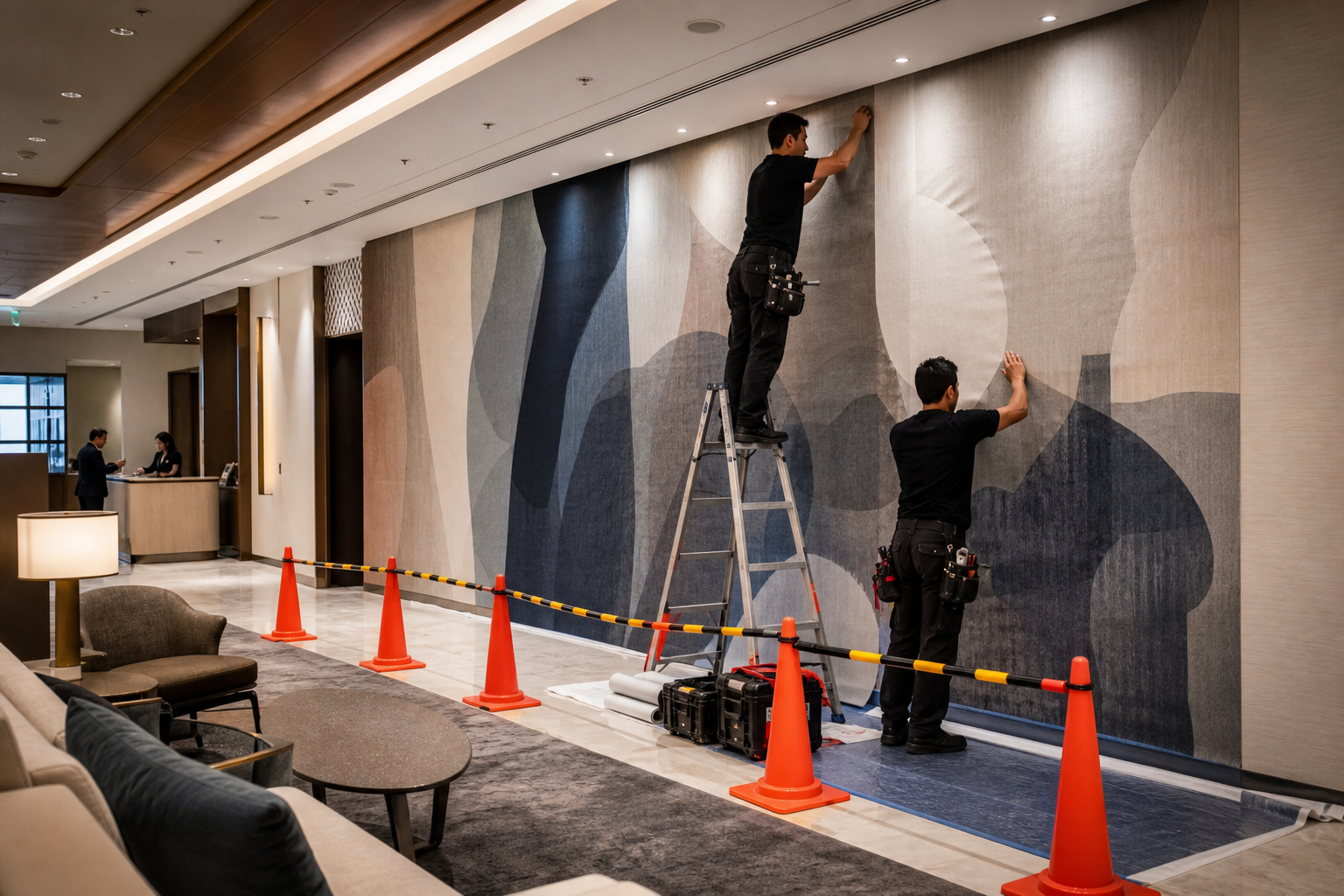
Decide whether you will print on-site directly to the wall or use preprinted panels. Both approaches have trade-offs. On-site direct printing reduces panel joins and can shorten installation for some projects, while preprinted panels may simplify access coordination. For mixed-purpose displays and video walls, make sure guest-facing content is separated from operational control layers, a best practice discussed in video wall procurement notes.
Plan these on-site items in advance.
- Who completes surface prep, including patching, sanding, and priming.
- Whether printing will occur on-site or off-site panels will be delivered and mounted.
- Site protection for adjacent finishes, furniture, and floor coverings.
- Noise, odour, and working hours constraints for occupied areas.
- On-site access requirements, lift or scaffold needs, and electrical supply considerations.
- Communications plan for front desk, housekeeping, and engineering to minimize guest disruption.
For guidance on video and mixed-purpose displays see the hospitality video wall notes at Craft Wall. If you need a local studio that provides photo-based quotes and scaled mockups for hotel installs, review the local example and procurement resource at hotel decorative wall graphics brampton.
Step 6: maintenance, lifecycle, and replacement workflow
Set a clear maintenance schedule and a digital provenance record for each installed wall. A replacement workflow avoids mismatched reorders and keeps visual standards consistent across properties.
- Approved cleaning procedures and a list of permitted cleaning agents.
- Inspection intervals and condition reporting format.
- Digital archive linking the installed wall to the approved mockup, artwork file, vendor reference, and installation date.
- Parts and spare panels policy if preprinted panels are used.
- Procedure for approving substitutes if the original artwork or finish is discontinued.
Durability testing and protective finishes are a key part of extending lifecycle in hospitality environments. See recommended durability and cleaning considerations in industry guidance on assessing wall artwork durability and standardized hotel wall art programs.
Decision matrix and final sign-off checklist
Use this one-page decision matrix to compare competing suppliers against hotel priorities. Score each option from 1 to 5, where 5 meets your requirement without exception.
- Compliance and documentation, for example fire certification and MSDS.
- Durability, including abrasion ratings and recommended cleaning protocols.
- Visual risk, meaning the accuracy of scale mockups and color management.
- Lead time from approval to installed completion.
- Total installed cost including surface prep, installation, protection, and warranty.
Final sign-off should include the procurement manager, the on-site operations lead, the interior designer or brand owner, and the vendor's authorized representative. Include explicit acceptance language for warranty and post-install remedies in the purchase order.
Frequently asked questions
What fire ratings and documentation should I require for hotel wall graphics
Require vendor-provided fire certification for the finished assembly and any protective coatings. Ask for test reports or classification certificates that match your local code requirements and include the documentation in the RFQ. Commercial wallcovering guidance highlights fire rating as a primary procurement factor.
Can direct-to-surface UV printing meet hotel durability and cleaning requirements
Yes, direct-to-surface UV printing can meet hospitality durability needs when paired with the correct substrate, primer, and protective finish. Ask for abrasion resistance data, approved cleaning agents, and a warranty. Some studios combine direct-to-surface UV printing with 4K artwork detail and a mockup approval workflow to reduce visual risk.
Should I print on-site or use pre-printed panels for lobby and guestroom walls
Choose on-site printing to avoid visible seams and to print directly to irregular surfaces. Choose preprinted panels when access, noise, or strict working hours make extended on-site work impractical. Plan crew access, protection, and install hours whichever method you select.
What minimal file, measurement, and mockup information should I send with an RFQ
Include high-resolution artwork files with version numbers, exact finished wall dimensions, site photos showing sightlines and furniture, and a scaled photo mockup or elevation. Require the vendor to return a true-scale visual mockup that shows centerlines and clearances.
How do I set up a replacement workflow so future reorders match the original installation
Keep a digital record that links the Wall ID to the approved mockup, artwork file name and version, vendor reference, material batch when possible, and installation date. Standardize dimension tolerances and quantity rules for each room type so reorders can be produced with minimal review. Standardized portfolio approaches reduce future procurement friction.
Next step
For a fast photo-based quote, scaled mockup, and specification support from a local UV wall printing studio, review the hotel decorative wall graphics brampton resource and contact a vendor who can produce on-site mockups and deliver installation guidance.
Ready to start your project? Contact Ink Blend for photo quotes, mockups, and specification support.