
Verified postal data, not guesswork
Every mapped code was checked against Canada Post's published listing and the municipal FSA index. A wrong coverage answer is the one thing a visitor checks immediately.
Interactive tool
Direct-to-wall printing means putting equipment and an operator in the room, so unlike a product that ships, it has a geography. This page answers the question directly. Enter a postal code and you will get one of three honest answers: yes and here is the page for your area, probably and let us confirm, or you are outside what we have mapped and here is what to do about it. It will never tell you no on the basis of a code it does not recognise.
The first three characters are enough — there is no reason to ask for a full address to answer a coverage question.
What this means in practice
Every mapped code was checked against Canada Post's published listing and the municipal FSA index. A wrong coverage answer is the one thing a visitor checks immediately.
An Ontario code we do not recognise returns 'probably, let us confirm'. You cannot prove a negative from an incomplete map, so it does not pretend to.
A match takes you to the page for your city, where the local building stock, approvals and access constraints are already covered.
'Do you come out this far' is the most common first question and the least useful one. Answer it in three seconds and get to the actual project.
Have those details to hand? That is everything we need to give you a real answer.
Send them nowA printed wall is not a product that arrives in a box. The image goes onto the prepared surface in the room itself, which means equipment, an operator and a working window all have to reach your building. That is the whole reason direct-to-wall printing produces a seamless result — and it is also why, unlike ordering wallpaper, there is a practical radius.
This is worth being straightforward about because the alternative is wasting your time. A supplier who takes a detailed enquiry from four hours away and then discovers the travel makes it unworkable has cost you a week. Three seconds and a postal code is a better opening move for everyone.
Being outside the mapped area is not automatically a no. Larger projects justify travel that smaller ones do not, and a run of several walls in one building is a different proposition from a single feature wall. The honest answer is that it depends on scope, which is a conversation rather than a form field.
Coverage is worked out from the Forward Sortation Area — the first three characters of a Canadian postal code, which identify the delivery area. Every code in the map was verified against Canada Post's published FSA listing and the municipal index rather than written from memory. That distinction matters: a wrong coverage answer is the single fact a visitor checks against their own address within seconds, and getting it wrong costs more credibility than having no tool at all.
Where the sources did not confirm something, it is left out rather than guessed at. A handful of Mississauga codes and the Thornhill area are deliberately unmapped — Thornhill in particular straddles Vaughan and Markham, and since Markham is not currently a mapped area, sending every Thornhill visitor to the Vaughan page would be wrong for around half of them.
The consequence is that the map is incomplete by design, and the tool behaves accordingly. An Ontario code it does not recognise comes back as probably rather than no, because an incomplete map cannot prove a negative. Only a code from another province is reported as outside the mapped area, and even then the message is to ask rather than to give up.
Multi-site work behaves differently from a single wall, and it is worth saying so at the enquiry rather than checking each address individually. A design practice specifying the same treatment across several locations, or a contractor coordinating a rollout, is a different scheduling problem — and frequently a more workable one, because several walls in one visit justify travel that one wall would not.
The same applies to a single building with multiple walls. A lobby, a corridor and an amenity room in one property is one mobilisation rather than three, which changes what is practical.
If your sites span the mapped area and beyond, send the full list. It is much easier to give a useful answer about the whole programme than to respond to six separate enquiries that each look marginal in isolation.
Context
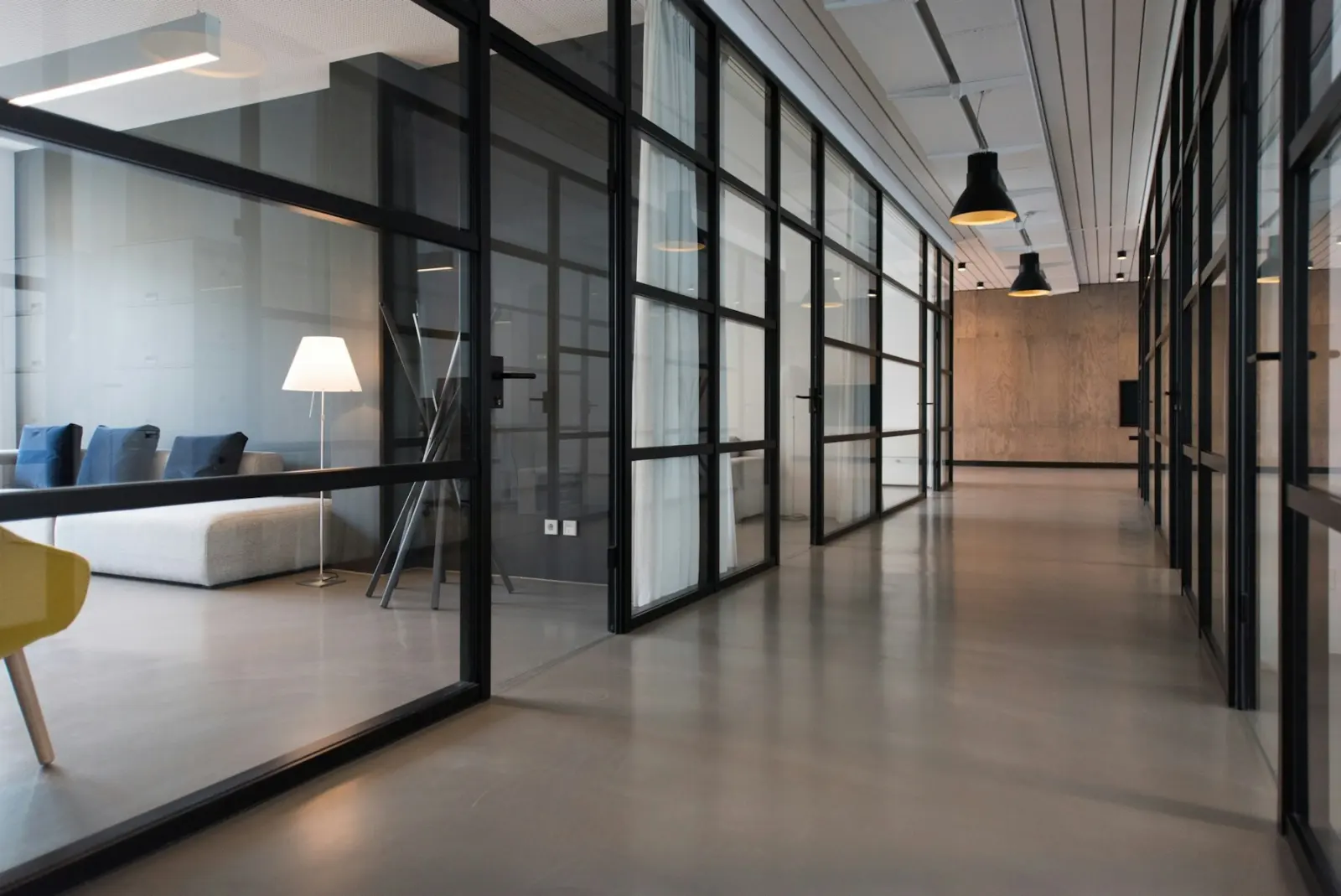
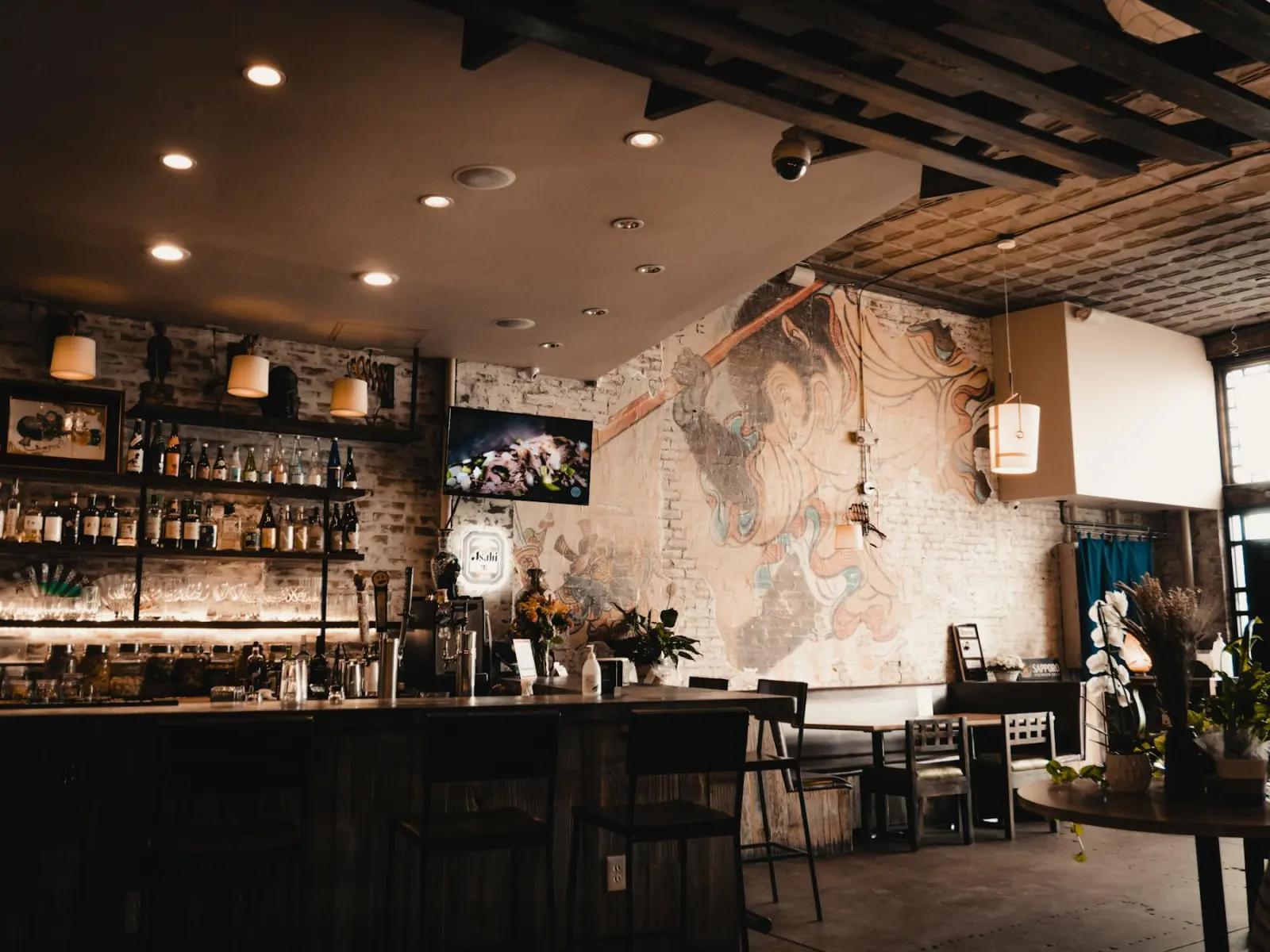
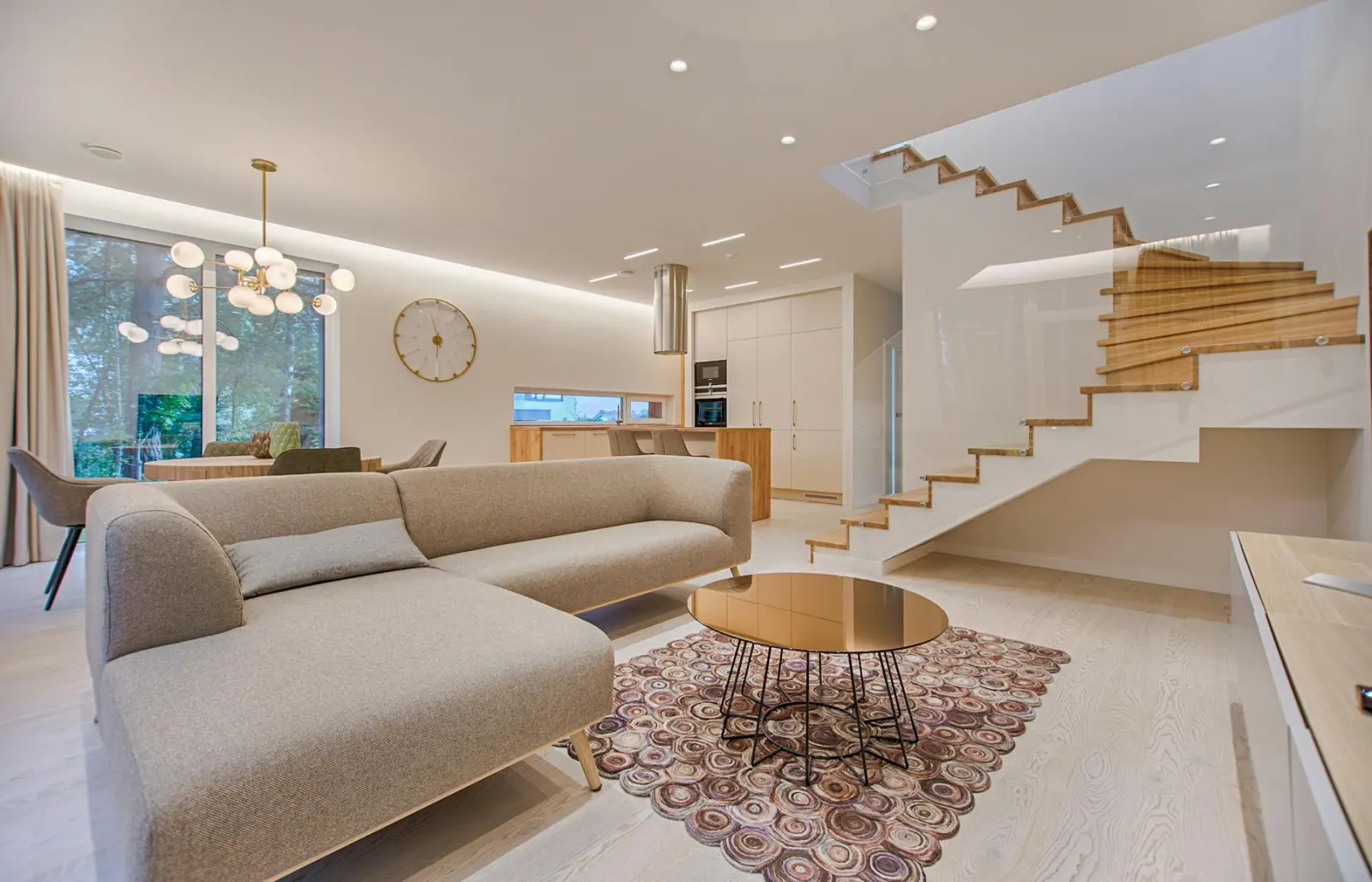
Reference imagery showing the sorts of rooms and surfaces this work sits in. These are not Ink Blend projects — each caption describes what the photograph actually shows.
FAQs
It means your code is in Ontario but not one of the specific areas mapped so far. The map is deliberately incomplete rather than padded with codes we could not verify, so an unrecognised Ontario code gets an honest 'let us confirm' instead of a no we cannot justify. In practice most of the Greater Toronto Area is workable.
Not automatically, but it is a real conversation rather than a form answer. Direct-to-wall printing means transporting equipment and an operator, so distance genuinely matters. Larger projects and multi-wall programmes justify travel that a single feature wall does not, so tell us the scope rather than assuming.
Because that is all that is needed. The first three characters identify the delivery area, which is enough to work out the municipality. There is no reason to ask for a full address to answer a coverage question, so the tool does not.
No, it is deliberate. The Thornhill FSA straddles Vaughan and Markham, and Markham is not currently one of the mapped areas. Routing every Thornhill visitor to the Vaughan page would be wrong for roughly half of them, so it returns 'probably' and invites a conversation instead of guessing.
There is no published pricing on this site at all, including travel, so the honest answer is that it is part of the quote rather than a separate published figure. What is worth knowing is that scope affects it — several walls in one visit spread any travel across the whole job in a way a single wall does not.
Send the full list in one enquiry rather than checking each address separately. A programme across multiple locations is a different scheduling problem from a single wall, and often a more workable one. Six separate enquiries each look marginal in isolation; one list of six sites usually does not.
Get a quote
Whether the checker matched your area or not, the useful next step is the same: send the wall photographs, rough measurements and what the space is used for. Coverage questions are quickest to settle alongside a real project.
Or reach us another wayStart with a wall photo
Send photos, measurements, and a rough idea. Ink Blend will map the fastest path from concept to quote.