

What should you ask before choosing commercial branding graphics?
Red-flag checklist to vet vendors for commercial branding graphics: key questions, why they matter, and what trustworthy vendor answers look like.
Choosing commercial branding graphics for a restaurant, retail space, hotel, or office is a high-stakes decision. A single poor installation can cost rework time, brand inconsistency, or unexpected downtime. This checklist focuses on red flags and direct questions you can ask vendors so procurement, design, and operations teams can compare proposals fairly and avoid common failure points.
Questions that reveal scope and deliverables
Vendors who think in deliverables make scope clear, reduce ambiguity, and make proposals comparable. Ask these questions first to reveal whether a vendor understands the job in concrete terms.
- Will you provide scaled visual mockups and a final print proof? Why it matters: mockups show composition at scale and reveal layout conflicts with doors, trim, and fixtures. What to expect: a scaled mockup with annotated measurements and a proofing method for final approval. Client intake templates that capture deliverables are recommended for accurate scoping.
- What files and formats will you deliver after signoff? Why it matters: you need final artwork and production files for future use or repairs. What to expect: layered source files or high-resolution PDF/TIFF with a clear ownership statement.
- Will you include a site measurement note and scale guide in the deliverables? Why it matters: scaled measurement notes prevent fit issues on install day. What to expect: annotated elevations or scale bars on mockups so installers can match the wall on print day.
- Do you offer quoting from photos and measurements so we can compare options quickly? Why it matters: photo-based quotes speed decision-making and reduce on-site surprises. A reliable vendor will explain the information they need and any limitations of a photo quote.
For help building intake questions that capture deliverables and file requirements, see client questionnaire templates used by professional designers to reduce rework and scope creep.
Ink Blend emphasises visual mockups, 4K artwork detail, and mockup approvals as part of a polished workflow, which is what you should expect from a premium direct-to-wall provider. For an expanded checklist and rollout considerations, see the commercial branding guide.
Questions about technical fit for direct-to-wall UV printing
Direct-to-surface UV printing and large-format surface graphics behave differently than traditional wallpaper or vinyl. These technical questions expose whether the vendor understands the substrate and durability you require.
- Can you describe the printing technology and why it suits our surface? Why it matters: different printers and inks perform differently on drywall, plaster, concrete, wood, and panels. A vendor should explain why direct-to-wall UV printing is appropriate for your interior surfaces and any limitations for your substrate.
- Do you print at 4K artwork detail and what does that mean for image sources? Why it matters: very large murals need high-resolution art to avoid visible pixelation. Expect the vendor to state minimum image resolution, recommended file types, and whether they can upsample or retouch imagery prior to print.
- How do you test adhesion and durability for areas with heavy touch, cleaning, or sunlight? Why it matters: busy hospitality or retail walls must withstand cleaning and abrasion. A solid vendor will describe test patches or reference installations with similar traffic patterns and maintenance routines.
Avoid vendors who cannot explain substrate compatibility, resolution requirements, or durability testing. Overlooked technical questions are a common source of rework and disappointment when choosing a commercial print provider.
Questions about colour accuracy and artwork control
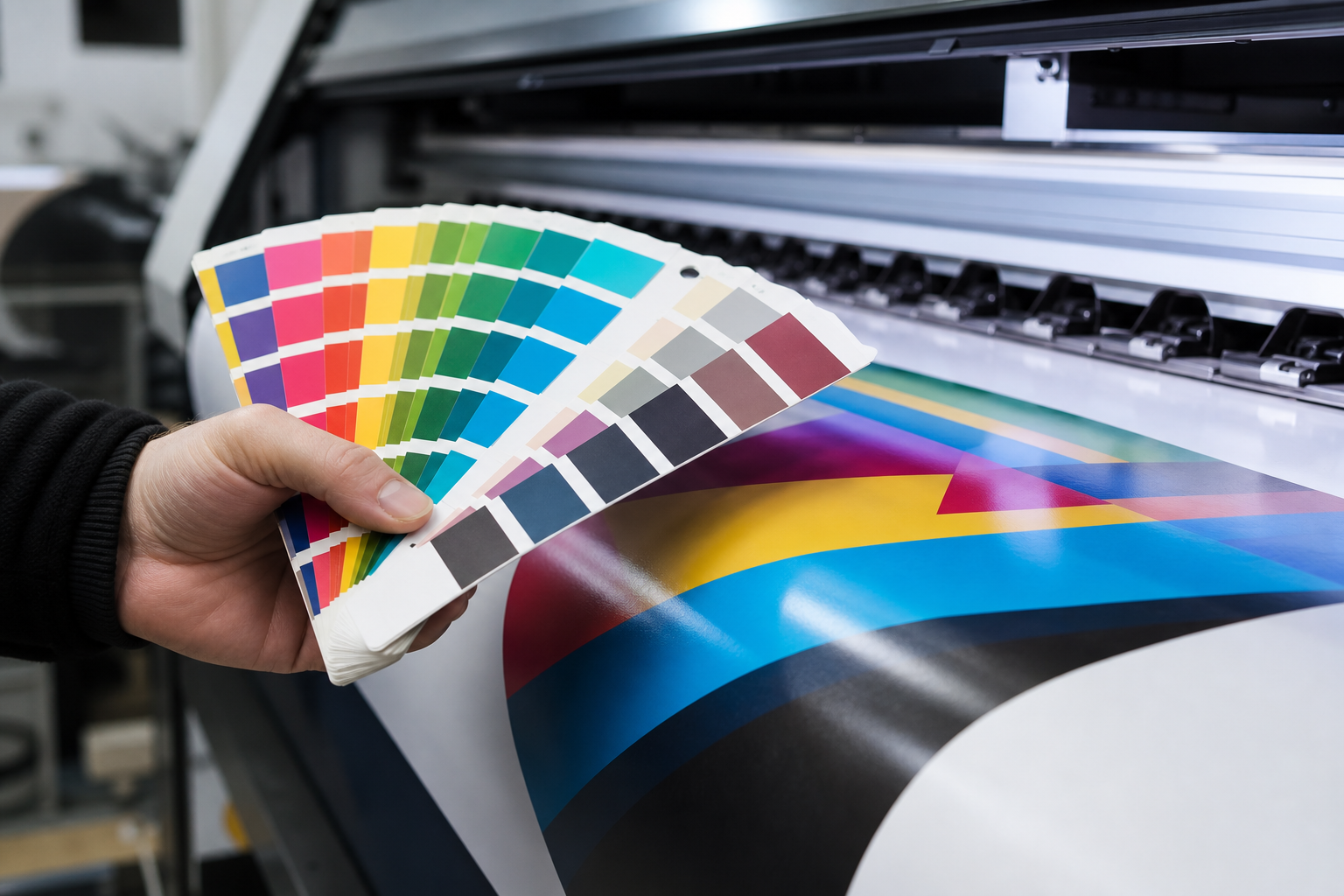
Colour is a brand asset. Confirm how colour will be controlled and approved so your brand stays consistent in print at scale.
- What colour workflow and proofing method do you use? Why it matters: ask whether the vendor uses ICC profiles, test patches, or printed swatches and how those will be presented for approval. A reliable workflow includes a named proof stage and colour checks against your brand standards.
- Who owns the final colour-corrected files and are revisions included in the price? Why it matters: ownership and revision limits determine your ability to reprint or hand files to another vendor later. Expect clarity about how many revision rounds are included and what format the final files will take.
- Can you provide a small printed test patch on-site before full production? Why it matters: a test patch on the actual wall surface will show how the ink looks under your lighting and texture. It also reveals unexpected colour shifts caused by substrate texture.
Document file requirements and approval gates in the brief so both sides understand deliverables and costs for additional revisions.
Questions about site logistics, surface preparation and disruption
Print day is where planning meets reality. Ask detailed site questions to avoid downtime, hidden preparation costs, and safety issues.
- Who is responsible for surface preparation and what preparation do you recommend? Why it matters: some surfaces need patching, priming, or consolidation before printing. Vendors should list what they will do and what you must arrange, for example moving furniture or protecting floors.
- What site access, power, and ventilation will you require on print day? Why it matters: large-format printers need power, and teams need safe access to all wall areas. Expect clear equipment lists and any requirements for lifts or scaffolding.
- How will you reduce business disruption during on-site work? Why it matters: ask about staging, noise control, working hours, cleanup, and whether the vendor can work in phases to keep parts of your space open.
- What housekeeping and post-install checks do you perform? Why it matters: a proper reveal includes cleaning, spot checks, and documented acceptance criteria for colour, alignment, and finish.
Make sure your vendor communicates responsibilities clearly and includes any site-prep costs in the quote rather than adding them on install day.
Commercial procurement red flags to watch for
Contracts and documentation reveal whether a vendor treats your project as a professional deliverable or an ad hoc job. Watch for these red flags in proposals and conversations.
- Vague change control or no written agreement for scope changes Why it matters: without clear change control you will incur unexpected costs. A good contract defines a change request process and rates for additional work.
- No warranty, workmanship guarantee, or acceptance criteria Why it matters: a warranty protects against early failure. If a vendor refuses to guarantee their work, treat that as a significant risk.
- No proof of liability insurance or health and safety procedures Why it matters: a vendor must show insurance for on-site work and explain safety practices. Insurance and safety documentation are basic requirements for commercial projects.
- Payment terms that demand large up-front deposits without staged milestones Why it matters: fair payment schedules align with deliverables and risk. Expect deposits tied to design approvals, production milestones, and final acceptance.
Prefer vendors who document processes and deliver repeatable assets rather than those who deliver one-off outputs without systems and controls.
How to test vendor credibility: portfolio, references and before and after proof

Portfolio warmth is useful, but evidence-based checks reveal competence. Use these verification steps before you sign.
- Ask for projects in the same sector and similar scale Why it matters: hospitality, retail, and office work have different constraints. A vendor that has printed restaurant feature walls should explain how they handled customer flow, cleaning, and fixtures.
- Request high-resolution before and after images with installation notes Why it matters: before and after photos should show how the vendor solved alignment, texture, or substrate issues. Avoid vendors who only show clean, staged product shots without context.
- Ask for client references and one test call Why it matters: direct feedback on timeliness, problem solving, and post-install support is priceless. A reference that will not talk is a red flag.
Procurement checklists designed for founders recommend questions that predict durable, long-term work rather than just beautiful one-offs. Use those questions to separate vendors who design systems from those who produce single artifacts.
For more detail on how commercial branding fits into broader rollouts and specifications, see the commercial branding guide.
An interview script and vendor answer checklist
Use this compact script during vendor meetings. Ask each question and mark answers that meet the criteria below.
- Will you provide a scaled mockup and a signed approval before print? — Good answer: yes, with mockup file and sign-off step.
- What minimum image resolution do you require for a mural this size? — Good answer: a specific DPI guideline or a statement about retouching limits.
- Who prepares the surface and what will you charge for prep? — Good answer: clear split of responsibilities and a written estimate for prep work.
- Can we see a test patch on-site? — Good answer: yes, and an explanation of what it will demonstrate.
- What warranties and insurance do you provide? — Good answer: workmanship warranty and proof of liability insurance.
- How many revision rounds are included and what formats are delivered? — Good answer: a defined number and a list of file formats and ownership terms.
Score vendors on clarity, evidence, and willingness to document. Favour vendors who answer with specifics rather than general assurances.
Quick vendor scoring cheat sheet
- Mockups and proofs provided: Yes / No
- Clear substrate plan and prep responsibilities: Yes / No
- Colour proofing method explained: Yes / No
- Insurance and warranty confirmed: Yes / No
- References for similar projects: Yes / No
Frequently asked questions
What is the difference between direct-to-wall UV printing and wallpaper or vinyl?
Direct-to-wall UV printing applies ink directly onto prepared interior surfaces using UV-cured inks for a permanent finish, while wallpaper and vinyl are applied as pre-printed, adhesive-backed media. Direct printing can offer higher durability and seamless scale for murals, but it requires careful surface preparation and a vendor experienced with substrates.
What should a visual mockup include before you approve a commercial branding graphic?
A mockup should include a scaled elevation or photo overlay, annotated measurements, placement of doors and fixtures, colour references, and an approval field. It should let you visualise the final piece at actual scale so you can discover conflicts before production.
Who is responsible for surface preparation and what are common red flags to look for?
Responsibility depends on the contract. Common red flags include vendors who say they will "handle it later" without written scope, or who cannot list surface repairs that may be required. Expect a written surface-prep plan and cost estimate when needed.
How can you verify colour accuracy for large-format wall graphics?
Ask for an agreed colour workflow, test patches on the actual surface, and a named colour approval stage. Printed swatches or an on-site test patch are the most reliable way to confirm how ink will appear under your lighting and on your substrate.
What insurance or documentation should a commercial graphics vendor provide?
At minimum, request proof of general liability insurance and a written workmanship warranty. For projects with scaffolding or complex access, ask for specific health and safety documentation and evidence of trained installers.
Next steps
Use the interview script and scoring cheat sheet above when evaluating proposals. If you want a starting point for requirements and rollout planning, review the commercial branding guide for alignment with commercial projects and design workflows.
Would you like a photo-based quote or mockup for your next wall? Contact Ink Blend at the official website to request one?
Talk with Ink Blend
Contact Ink Blend to ask about the next step and confirm which options fit your needs.