
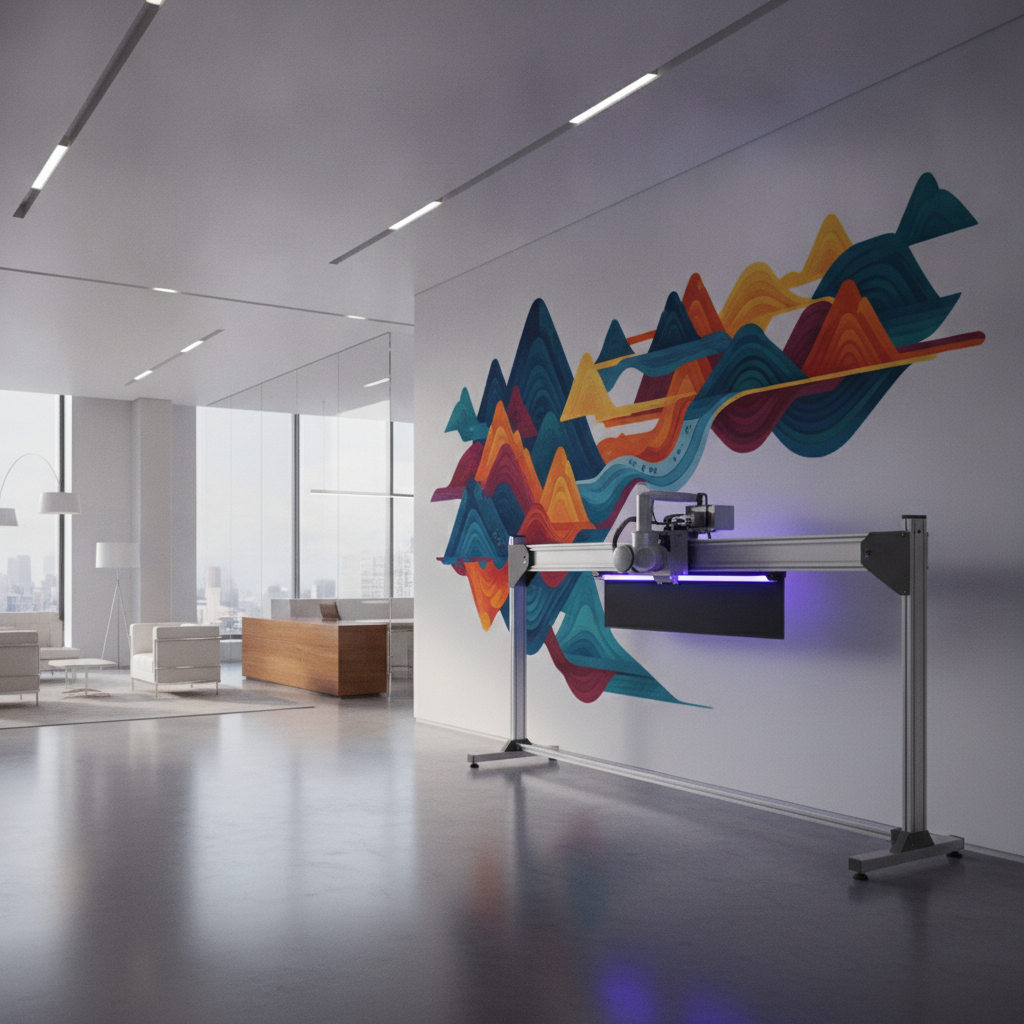
UV Wall Printing Durability: Keep Walls Sharp in Brampton
Real installer ranges by venue, plus failure signs and prep steps, so UV wall printing durability in Brampton spaces stays high-years, not months.
UV wall printing durability is the length of time a direct-to-wall mural keeps its color, clarity, and adhesion on an interior surface. In Brampton offices on primed drywall, we typically see 7–10 years of crisp results. In high-traffic hospitality corridors, plan for 3–5 years unless you protect lower-impact zones and clean gently.
By ankit p — Ink Blend · Last updated: 2026-07-10
Quick answer: Expect 7–10 years on smooth, primed drywall in climate‑controlled offices; 5–8 in hotel lobbies; 4–7 in retail; and 3–5 in busy restaurant corridors. The biggest drivers are surface prep, oil/stain blocking, artwork placement above scuff zones, and non‑abrasive cleaning routines. Based inBrampton, Ontario (projects across Ontario and Canada) Primary servicesUV wall printing, custom wall murals, commercial branding, large-format surface printing Quoting methodPhoto- and measurement-based quotes with fast guidance WorkflowDiscover → Concept & mockups → Approvals → On-site print Industries servedRestaurants & cafes, retail & salons, offices & corporate, hotels & condos, homes & cultural spacesBrampton + GTA installer tip
Most Brampton strip‑mall interiors use painted CMU block or landlord eggshell over drywall. We wipe with a degreaser, then bond‑prime near mop lines where winter slush collects. We also print overnight so the wall stays clean while LED‑cured ink hardens without public contact.
- Overview
- How long it lasts
- Durability by surface
- Indoor vs high-traffic
- How Ink Blend preps
- Failure signs and causes
- Durability by venue type
- Questions to ask providers
- FAQ
Overview
Durability lives or dies at prep and maintenance. On smooth, primed walls with stable HVAC, direct‑to‑wall UV prints stay sharp for years. In scuff‑heavy corridors, moving fine detail above 42–48 inches and cleaning with microfiber extends life without turning the space into a museum piece.
Ink Blend combines direct‑to‑surface UV printing with mockups and approvals so what you see in design survives real traffic. Explore our UV wall printing service and the process we run in Brampton and across the GTA.
How Long Does UV Wall Printing Actually Last? (The Installer’s Answer)
Our field ranges: 7–10 years in climate‑controlled offices; 5–8 in hotel lobbies; 4–7 in retail; 3–5 in busy restaurant corridors; 2–4 near sanitizer or coffee stations. Raising critical detail, sealing oils, and avoiding abrasives keep you at the top of each range.
- Offices and boardrooms: 7–10 years on primed drywall. Micro‑type and subtle gradients hold up thanks to low abrasion.
- Hotels and condos: 5–8 years in lobbies and reception where contact is moderate; elevate detail above luggage paths.
- Retail and salons: 4–7 years; expect scuffs at 24–36 inches from bags and carts. Use bold color fields low, detail high.
- Restaurants and cafes: 3–5 years in corridors and host zones (chair‑back height is the danger band). 2–4 around sanitizer or coffee bars.
These are not lab numbers; they’re installer ranges from real Brampton and GTA sites. Share photos and measurements on our custom wall murals page for a quick durability read on your wall.
What Determines Durability — Surface by Surface
Smooth, properly primed drywall wins for longevity. Oily, glossy, or dusty substrates need bonding or stain‑blocking primers. On tile and laminates, we require a bonding system and warn clients that grout‑edge touch‑ups are normal after 18–24 months in busy zones.
SubstratePrep we requireWhat we expectOur stance Primed drywallQuality primer, dust‑freeHighest adhesion; 7–10 years in officesBest for fine typography Painted drywall (eggshell/satin)Degrease; scuff glossy paintsStrong hold; 4–8 years by venueWe test a 6×6 in. patch in wear zones Textured drywall or CMU blockSkim/patch where feasibleImage mirrors texture; lower micro‑detailWe push bolder shapes over micro‑lines Wood panelsSeal tannins/oils; light sandGood once sealed; grain shows by designGreat for warm, natural backdrops Tile/laminateBonding primer; remove cleaner residueSolid center adhesion; grout edges need touch‑ups at 18–24 monthsWe won’t print bare tile without a bonder ConcreteDust binder + primerDurable; texture softens edgesExpect subtle haloing on micro‑typeFor readability planning (type size, contrast) at large scale, see established guidance like these large‑format design tips. We then tailor to your wall and traffic pattern.
Indoor vs. High-Traffic Commercial Environments: What Changes
Quiet offices are about precision; restaurants and retail are about abrasion and oils. We move critical detail higher, seal stains, and write a cleaning script your staff can actually follow. That’s how a showpiece stays a showpiece.
- Abrasion control: Keep dense textures and logos above 42–48 inches; use solid color fields near chair‑backs and entry lanes.
- Oils and moisture: Prime with oil blockers near host stands, sanitizer stations, and coffee bars; dry times matter.
- Cleaning script: Microfiber + mild, non‑abrasive cleaner; no scouring pads. Train once; post the steps in the back.
- Light exposure: Where sun hits, we suggest window film or moving gradients away from the direct beam.
Product display basics like banner and substrate behavior can inform expectations; see this overview of posters and banners to understand how materials respond to handling before we translate the idea onto your wall.
Local considerations for Brampton
- Winter salt and slush lead to mop splash at baseboards—bond‑prime the lower 6–10 inches to stop wicking.
- Summer humidity spikes slow primer cure—plan prep earlier in the day for evening prints.
- Many units have drop ceilings and narrow corridors—place detail above cart and chair traffic bands.
How Ink Blend Prepares Surfaces to Maximize Print Life
Our prep mantra: degrease, seal, verify. We remove residues, block oils or stains, and run a test patch in the scuff band. Mockups set heights before we roll in. Path protection and LED curing keep the wall clean while the print locks in.
- Discovery from photos: Send wall shots and dimensions for fast guidance and a quote.
- Mockups and approvals: We place art to scale, confirm sightlines, and raise fragile detail out of harm’s way.
- Surface preparation: Degrease, scuff glossy paint, patch, and prime or oil‑block as needed. General wall‑prep fundamentals mirror established paint prep steps before our direct‑print stage.
- On‑site print: Direct‑to‑wall UV printing with controlled passes; LED cures as we go, with traffic paths protected.
- Handover: A simple cleaning script and a quick follow‑up after reopening to confirm results.
See how we turn approved art into durable features via custom artwork printing and our step‑by‑step process.
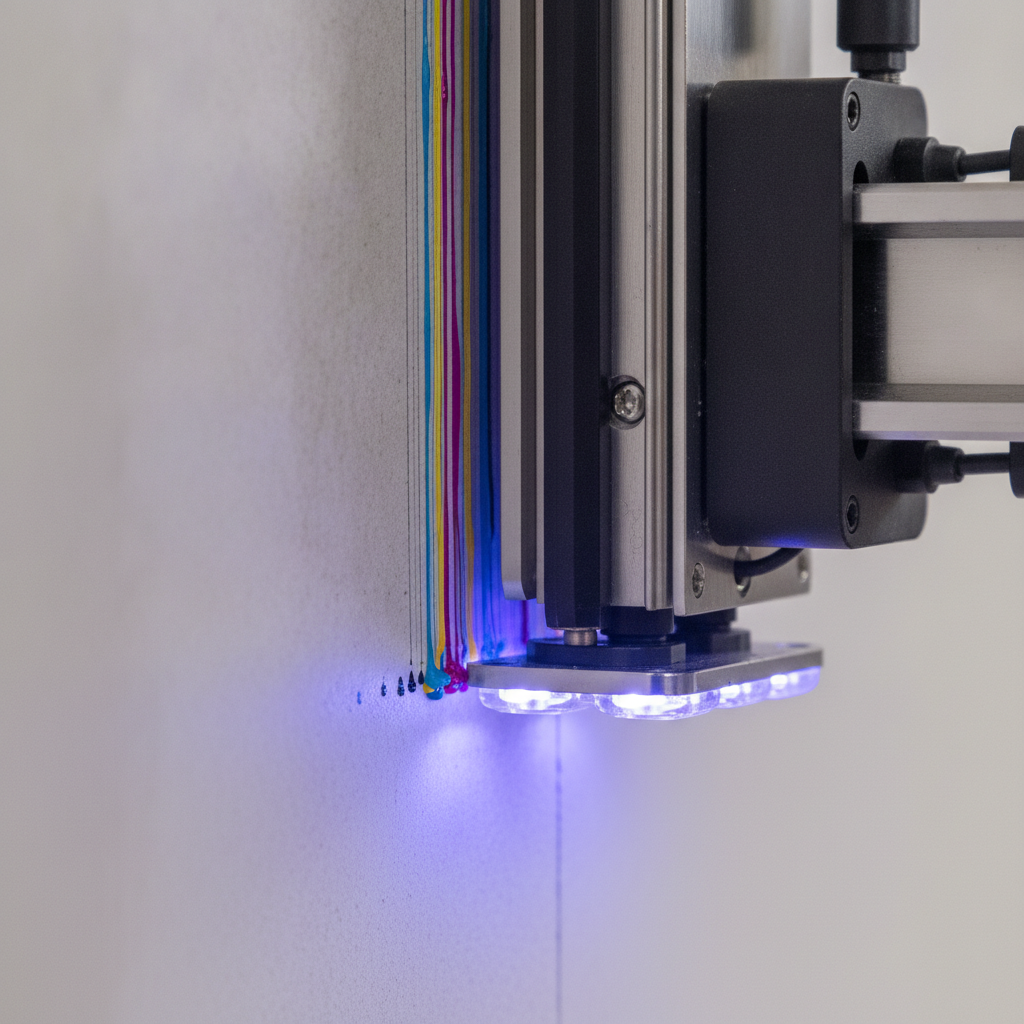
Free wall readiness review: Email a photo and rough size. We’ll flag prep risks and suggest art heights that keep detail safe from scuffs.
Signs a UV Wall Print Is Failing — and What Causes It
Failure looks like polished glossy spots from scrubbing, ink lift along a mop line, or edge wear where bags and chairs rub. These trace back to abrasives, moisture wicking, or printing over oils. Each is preventable with our standard prep and cleaning script.
- Polished shiny patches: Abrasive pads or harsh chemicals. Switch to microfiber and mild cleaner; shine is abrasion, not “extra clean.”
- Ink lift at baseboard: Moisture wicking from repeated mopping. Solution: bond‑prime the lower band and keep sanitizer drips off the wall.
- Edge wear at corners: Bag and chair impact. Add corner guards or shift art margins; we call this out in mockups.
- Isolated flaking: Residual silicone/oils. Fix with solvent wipe and stain/oil‑blocking primer before any reprint.
We design for durability through our commercial branding work—art direction that respects how spaces actually run.
UV Wall Printing Durability by Venue Type: Restaurants, Offices, Retail, Hotels
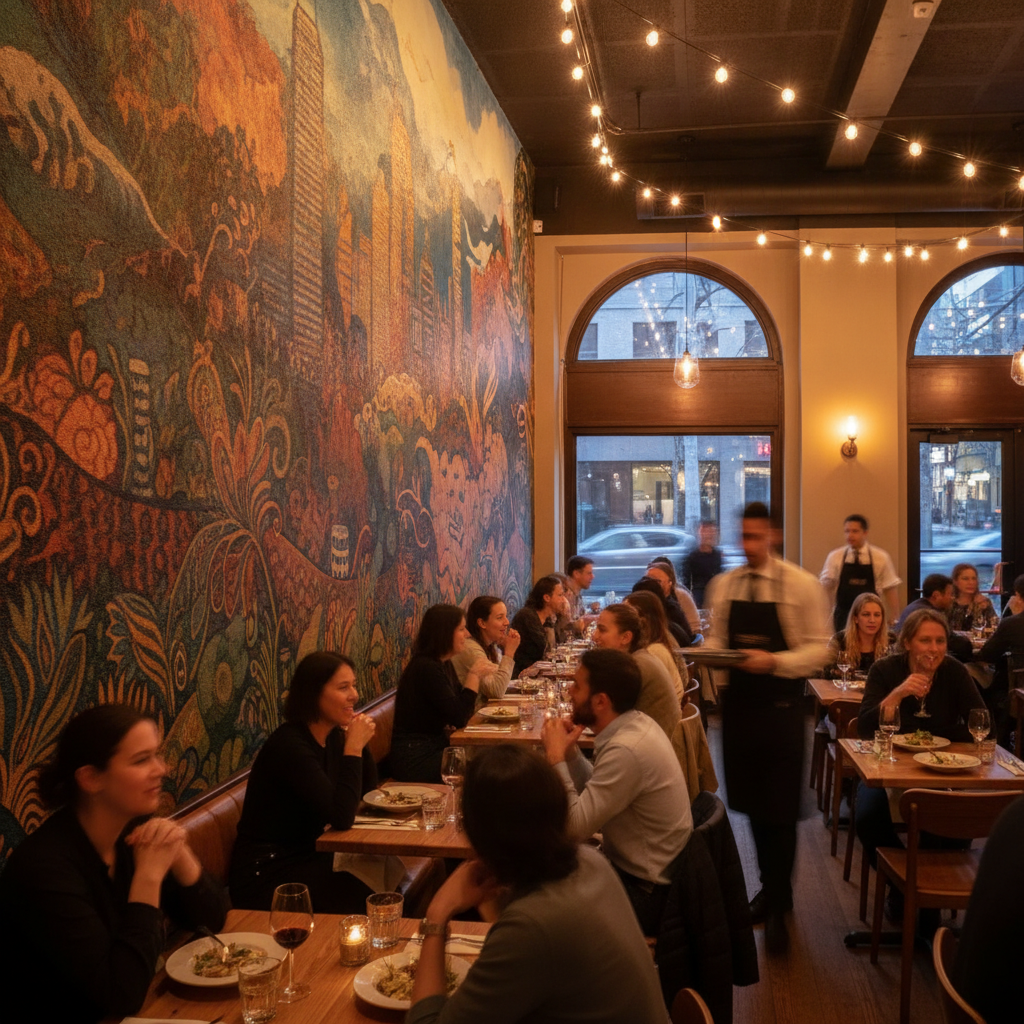
Restaurants face oils, steam, and chair‑backs; retail adds bag scuffs; offices are gentle; hotels juggle luggage paths. We set clear ranges and place detail where hands and carts won’t live.
- Restaurants & cafes (Brampton/GTA): 3–5 years in corridors and host lines; 2–4 near sanitizer/coffee. Keep fine detail above 42–48 inches; bond‑prime lower band.
- Offices & meeting rooms: 7–10 years on smooth drywall; preserve gradients and micro‑type.
- Retail & salons: 4–7 years; reinforce ends of rack aisles with bold fields and sacrificial trims.
- Hotels & condos: 5–8 years in lobbies; elevate delicate elements above luggage swing zones.
Rolling out across multiple GTA sites? Our surface printing and UV wall printing services keep finishes and brand color consistent.
Questions to Ask Any UV Wall Printing Provider Before You Commit
Pick teams who talk surfaces, primers, and cleaning—not just machine specs. Ask for test patches, mockups with heights, and a plan for oils and traffic. If they can’t answer fast, durability will be guesswork.
- Which primer or sealer fits my wall and traffic level? Will you run a test patch in the scuff band?
- How do you handle oils, silicone, and cleaner residues before printing?
- Can I approve to‑scale mockups with detail safely above chair‑back and bag zones?
- What’s your cleaning script after install—tools, frequency, and what to avoid?
- How will you protect traffic paths and ensure proper cure before reopening?
Many top results (Outdoor Wall Printing, Friankor’s 3D UV Wall Printing Machine, Printavaco’s durability notes, WallPrinterMachines) focus on hardware. Ask for the on‑site plan that makes those specs last on your wall.
FAQ
Will the mural look different under warm restaurant lighting?
Warm bulbs can soften cool blues and boost reds. We proof mockups against a photo of your space and, when needed, nudge color for the installed lighting. That way your brand tones feel right during service, not only on a designer’s monitor.
How do I clean a printed wall without dulling it?
Use a soft microfiber cloth and a mild, non‑abrasive cleaner. Skip scouring pads and harsh solvents that polish cured ink. Wipe gently, dry, and do light, frequent cleans in host or coffee areas rather than aggressive scrubbing.
Can you print over existing semi‑gloss paint?
Yes—with scuff‑sand and a suitable primer first. High‑sheen paints are low‑energy surfaces; a quick scuff and bonding primer help the UV ink lock in evenly so detail doesn’t shear under cleaning.
Is direct‑to‑wall better than wallpaper for durability?
In high‑traffic spaces, removing seams helps a lot. Wallpaper can be strong but edges are failure points. Direct print relies on the wall itself—no seams to catch bags or moisture. With smart prep and cleaning, both last, but direct print avoids edge lifts.
Key Takeaways
Prep well, place art smartly, and clean gently—those three choices set your durability range. Offices hit the top of the range; restaurants can too when oils are sealed and details sit above the scuff band.
- Plan for 7–10 years in offices; 3–5 in busy corridors without protection.
- Seal oils, scuff glossy paint, and bond‑prime lower bands near mop lines.
- Put micro‑detail above 42–48 inches; use bold fields where contact is constant.
- Train staff on microfiber + mild cleaner; no abrasives.
- Use mockups to lock sightlines and heights before print day.
Ready to plan a durable feature wall? Start with our UV wall printing page, explore commercial branding ideas, and see our step‑by‑step workflow.
About the author: ankit p, Content Contributor at Ink Blend. Focuses on UV wall printing, surface preparation guidance, and project coordination for Brampton and GTA interiors. Works with the studio team to translate 4K artwork and mockups into durable, brand‑safe walls.