
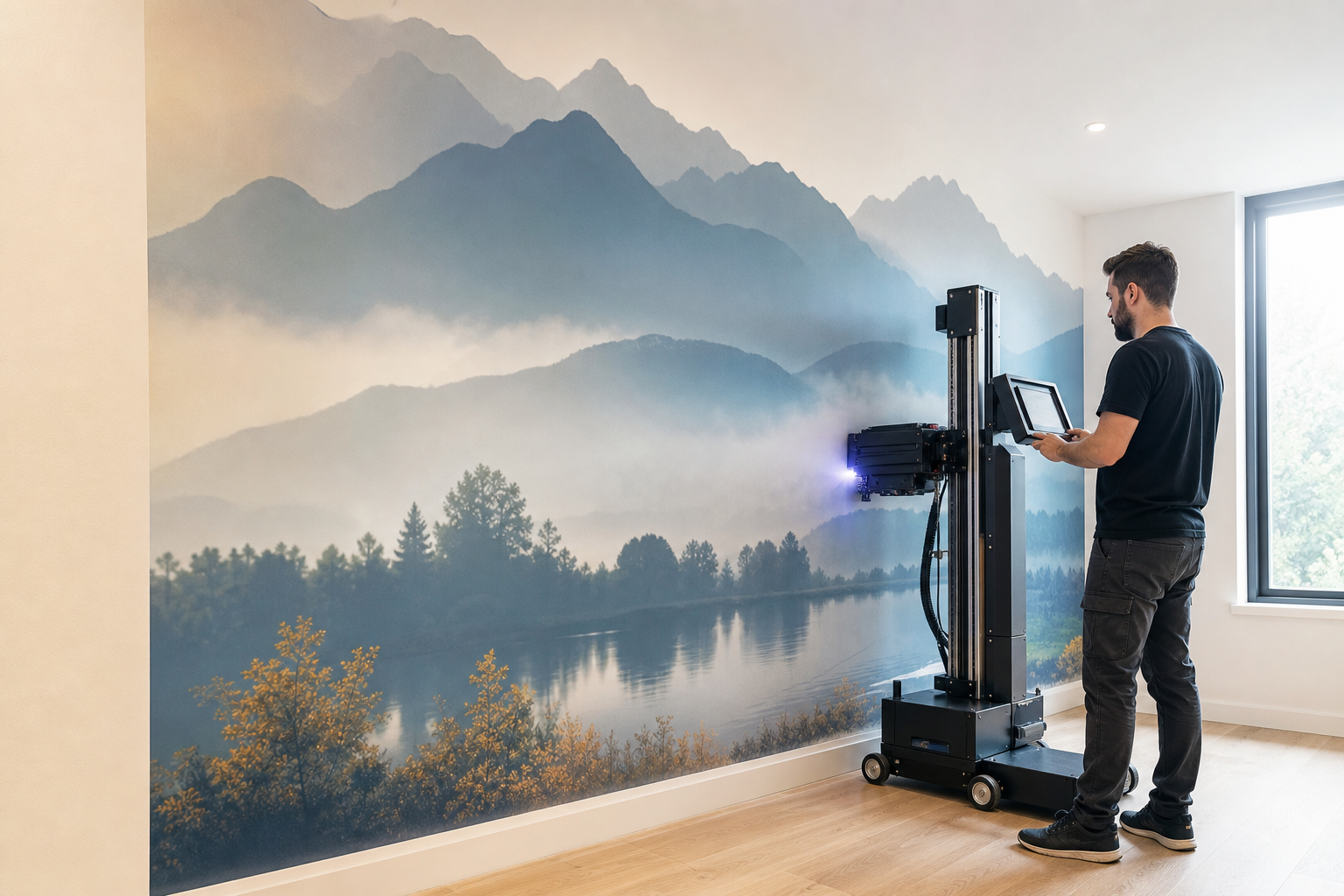
Can you print directly on drywall with UV wall printing?
Learn what drywall preparation sources support and which UV wall-printing questions to verify with a provider before choosing a service.
The supplied evidence does not establish that every drywall surface is compatible with UV wall printing. It does support a narrower point: conventional drywall finishing is intended to make seams, fasteners, and joints disappear so the surface looks continuous when it receives a finish. This guide separates those supported preparation facts from the UV-specific questions that must be confirmed with a provider for the exact wall, coating, equipment, and project.
What the drywall evidence supports
This Old House explains that finishing drywall involves applying joint compound, embedding tape, and sanding in stages. It describes the goal as making seams, fasteners, and joints disappear so the surface looks continuous once painted. Read the supplied details in This Old House’s drywall finishing guide.
The Spruce describes a similar preparation sequence for newly installed boards: tape and apply compound over seams and screw holes, then build layers of compound to create a smooth surface for primer and paint. That exact scope appears in The Spruce’s drywall finishing guide. These sources support statements about ordinary drywall finishing. They do not establish UV-ink compatibility, adhesion, colour response, durability, or acceptance criteria for a particular printing system.
That distinction matters. A surface can look ready for paint while a provider still needs to evaluate whether its own process is suitable. Conversely, a visible seam or fastener mark is a drywall-finishing observation, not proof that printing is impossible. Record what you can see and ask the provider to explain how those observations affect its decision.
Document the wall without deciding compatibility yourself
Begin with a neutral description of the wall. Note whether it is newly installed or existing, whether seams or fastener marks are visible, and whether the surface appears smooth or textured under ordinary room light. Record patches, repairs, trim, openings, fixtures, and changes in plane. These are observations for discussion, not technical conclusions about UV printing.
Use a consistent set of photographs for your own records:
- a full view that shows the wall in relation to the floor, ceiling, and adjacent surfaces;
- angled views that make visible texture, ridges, joints, or changes in plane easier to see;
- close views of patches, seams, screw areas, dents, peeling finishes, or other features you want the provider to consider;
- a view of trim, doors, windows, outlets, vents, and other fixed elements near the intended image area.
Measure the overall area and label the units. Record the position of fixed elements so the provider understands what is present. Do not promise that photographs or dimensions are sufficient for a decision; ask what additional information or inspection the provider requires. If you do not know the existing coating, primer, repair material, or wall history, mark it as unknown rather than guessing.
Keep the observations tied to locations. A simple sketch can label where a seam, patch, fixture, or texture change appears without claiming what caused it. Use the same labels in photographs and written questions so everyone is discussing the same area. If the wall changes after the record is created, update the record and tell the provider rather than assuming an earlier answer still applies.
Evidence-backed drywall preparation facts
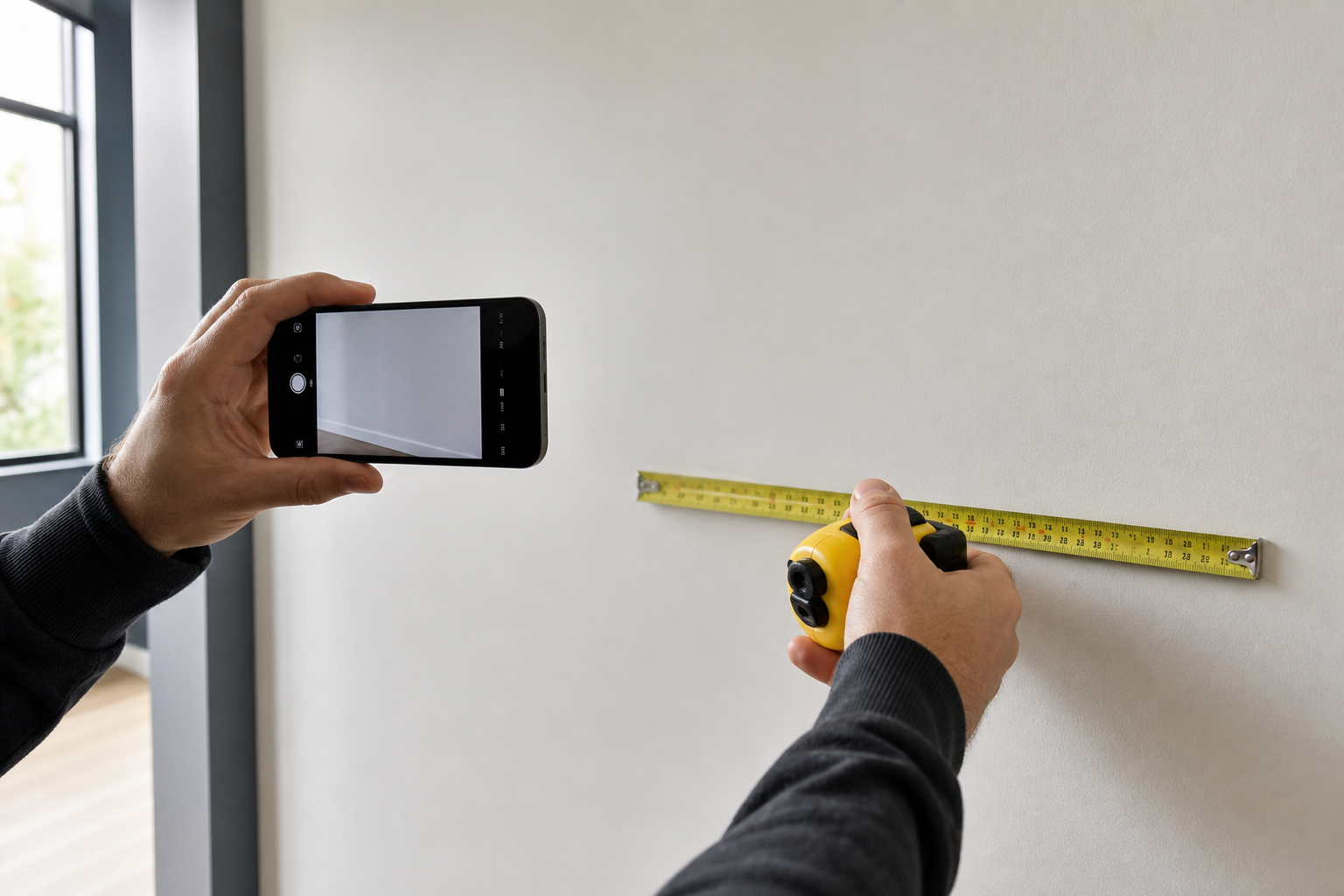
The two supplied drywall-finishing sources agree on the core preparation sequence: seams and screw areas are covered, joint compound is applied in stages or layers, and sanding is used to create a smoother, continuous appearance. They do not provide a universal number of coats, a finish-level specification, or a UV-printing standard. Avoid adding those details unless a directly applicable source or the selected provider supplies them.
Use the following list to organize a conversation with the person responsible for the wall finish:
- Are tape, seams, and screw areas complete, or is finishing work still underway?
- Are ridges, hollows, tool marks, or transitions visible under the lighting normally used in the room?
- Has sanding dust been removed through the method appropriate for the surface and surrounding space?
- Is the surface coated, and can the product or wall history be identified?
- Are there repairs whose materials or finish differ from the surrounding wall?
These questions do not prescribe a wall-printing specification. They help identify what is known about the drywall so the provider can state its own requirements. If the provider requests additional preparation, ask it to describe the issue being addressed and who should perform that work.
UV-specific questions to verify with the provider
No supplied excerpt states which drywall compounds, primers, paints, textures, or surface conditions are compatible with a particular UV wall-printing system. Treat every UV-specific statement as a provider question until it is supported for the exact project.
- Does your system accept this exact wall surface? Share what is known about the drywall and coating, then ask the provider to confirm what it can evaluate.
- What surface information do you require? Ask whether product names, wall history, photographs, measurements, or an in-person review are necessary.
- How do you address uncertainty? If the coating or repair history is unknown, ask what verification the provider uses before accepting the project.
- Which visible conditions matter to your process? Ask the provider to distinguish cosmetic drywall observations from conditions that affect its own equipment or output.
- What appearance should the client evaluate? Ask how wall texture, joints, patches, and fixed elements may remain visible or affect the image.
- Who is responsible for additional surface preparation? Confirm whether the client, a drywall professional, a painter, or another party handles any requested work.
Write down the answers and keep them attached to the project description. If a statement is conditional, record the condition. If the provider cannot decide until it sees the wall, do not turn that uncertainty into a promise.
Compare scope and evidence, not broad assurances
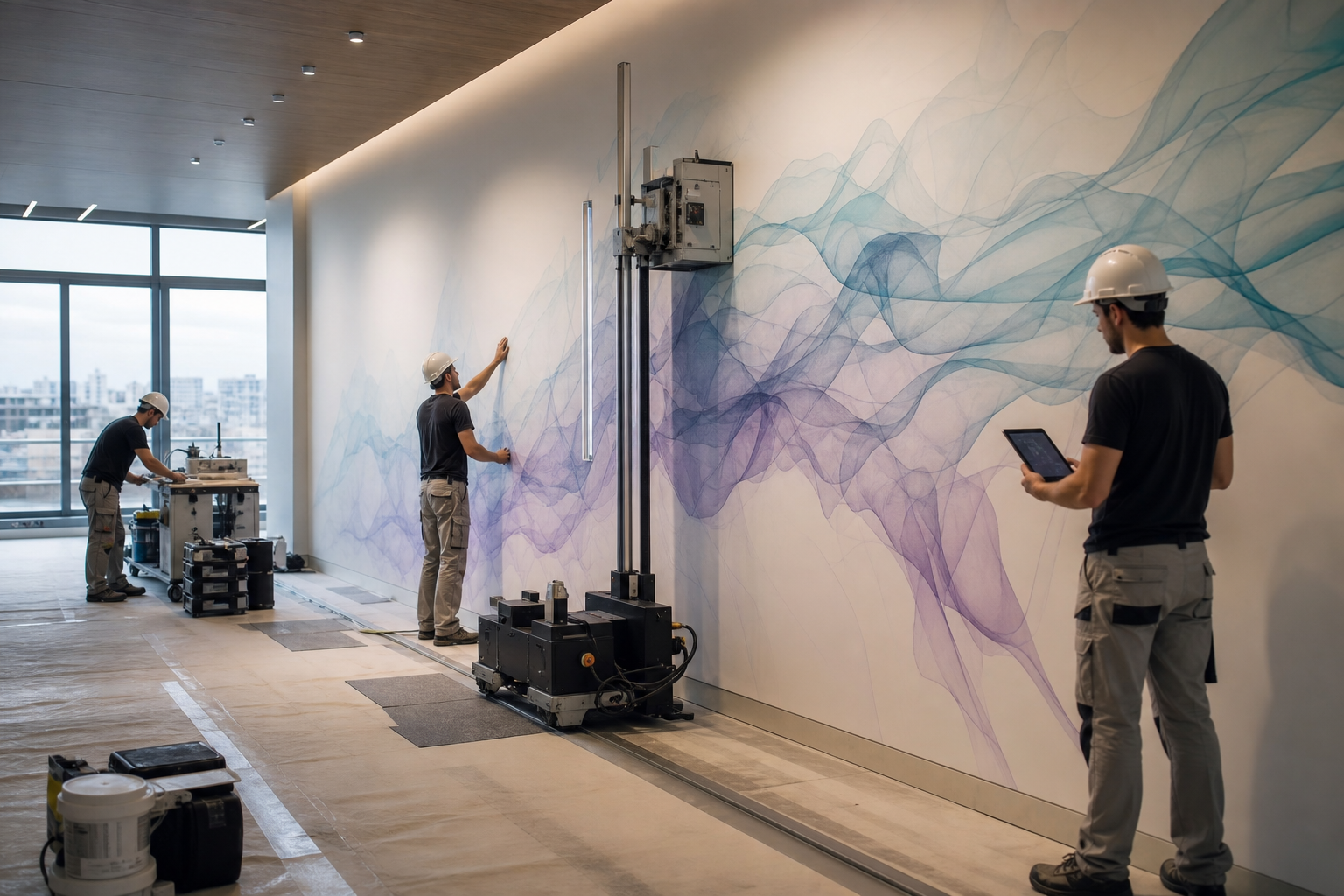
When comparing providers, use the same wall description and the same questions. Ask each provider to separate confirmed facts from assumptions and to identify anything that remains subject to seeing the wall. A useful response should explain what the provider is evaluating and what the client must confirm, without claiming that all drywall behaves the same way.
Review the proposed scope for boundaries. Confirm which wall area is being discussed, which fixed elements are excluded, what files or artwork information the provider needs, and what decisions remain with the client. Ask how changes to the wall condition or image area would be handled. These are scope questions only; this article does not assert a standard production sequence.
Keep drywall preparation and printing suitability as two related but separate decisions. A drywall professional can explain whether ordinary finishing work is complete. A wall-printing provider must explain whether its own system is suitable for the documented surface. Neither conclusion should be invented from a generic article title.
Frequently asked questions
Does a smooth, paint-ready drywall surface prove that UV printing will work?
No. The supplied sources support how drywall is finished for a smooth, continuous appearance. They do not establish compatibility with a particular UV wall-printing system. Ask the provider to evaluate the exact surface and coating.
Which drywall preparation facts are directly supported?
The supplied excerpts support embedding tape, applying joint compound over seams and fastener areas, building the finish in stages or layers, and sanding toward a smooth surface where joints are not visible. They do not specify a universal coat count or UV-printing finish level.
What if the wall coating or repair history is unknown?
Record it as unknown and tell the provider. Ask what information or inspection it needs before deciding whether to accept the surface. Do not infer compatibility from appearance alone.
Should the provider or a drywall professional answer preparation questions?
Ask each party about its own scope. A drywall professional can discuss ordinary finishing conditions. The wall-printing provider should state the surface requirements for its own system and identify any further preparation it requests.
Ask about wall printing on drywall
Visit Ink Blend to ask whether its current wall-printing service is suitable for your documented drywall surface and what information it requires before making that determination.