
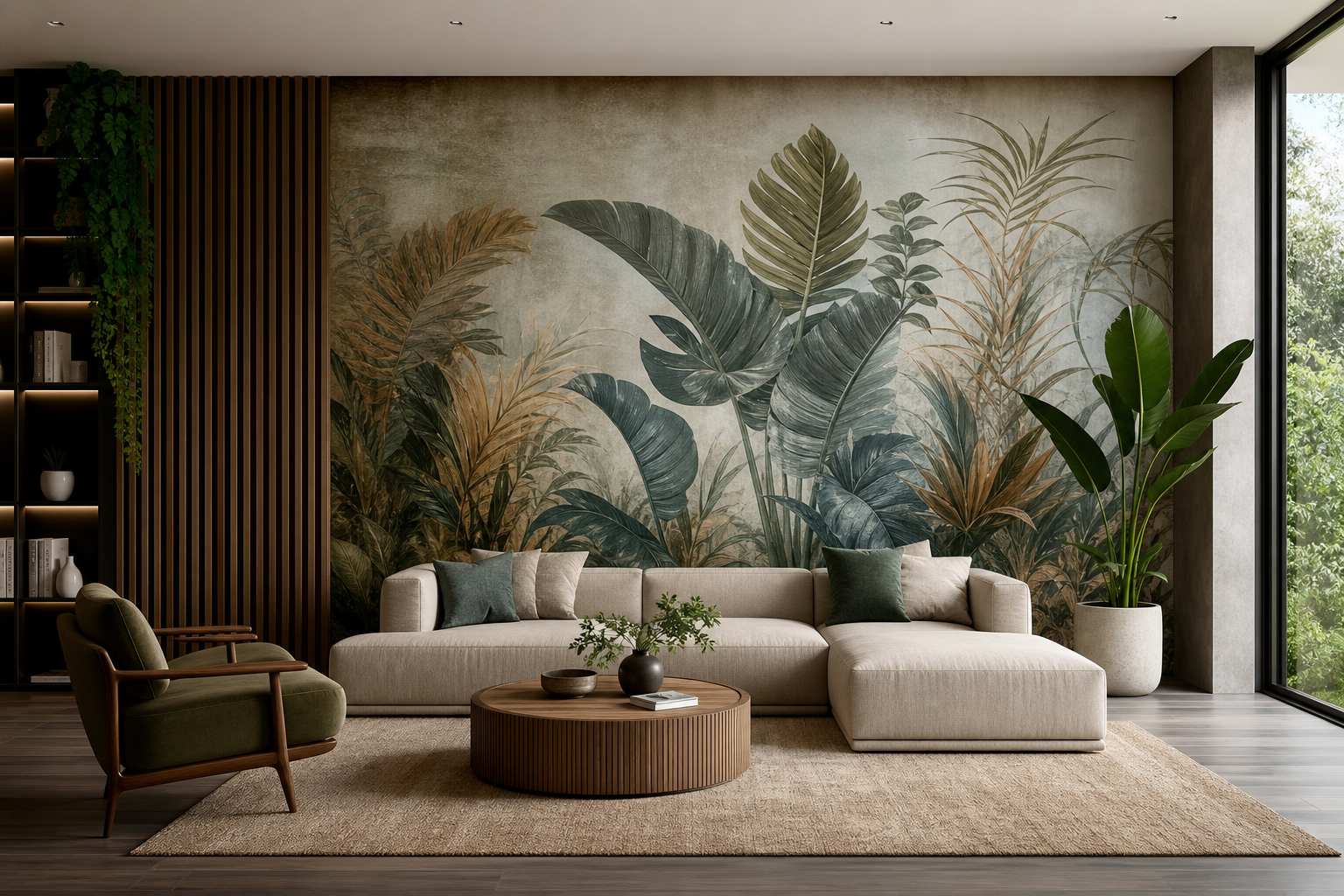
7 feature wall printing ideas to transform blank interior walls
Seven practical feature wall printing ideas for restaurants, offices and homes, with recommended print methods, surface-prep notes and a photo-quote checklist.
What this article delivers and how to use the ideas
This article presents seven concrete feature wall printing ideas you can evaluate for restaurants, retail, offices, hotels, condos, and homes. Each item explains the creative concept, the recommended print method, where it works best, surface and preparation notes, and a short on-site coordination tip. If you want a fast estimate, Ink Blend offers photo and measurement quotes and a mockup process that helps you preview the design at scale before we print.
Quick comparison: UV direct-to-wall, printed panels and wallpaper alternatives
Before diving into ideas, a compact comparison helps you choose the right method. Direct-to-wall UV printing gives crisp, high-resolution colour and durable adhesion directly on prepared interior surfaces. Printed rigid panels provide repeatable registration and easy removal or replacement. Removable wallpaper and adhesive murals are a lower-commitment option when minimal surface prep or temporary installation is required. Editorial resources note wallpaper mural options and when to choose them for room scale and durability, which is useful when comparing approaches for hospitality and residential environments CanvasArtRocks. For a closer look at the studio workflow and surface-readiness steps, see the direct to wall printing process outlined by Ink Blend direct to wall printing process.
7 feature wall printing ideas with the best print method for each
The seven ideas below are numbered for easy comparison. Each entry lists the recommended print method, the types of spaces where the idea performs best, surface suitability notes, and a one-line coordination tip to reduce surprises on site.
-
1. Full-bleed photographic mural — direct-to-wall UV printing
Concept: A single, full-bleed photograph scaled to cover the entire wall creates an immediate sense of place. Think landscape panoramas, large-scale product photography for retail, or lifestyle imagery for dining spaces.
Recommended print method: Direct-to-wall UV printing for edge-to-edge clarity and 4K artwork detail. Using direct printing preserves subtle gradients and photographic sharpness that look best at close viewing distances. Industry commentary also supports the dramatic impact a single large print has on a room, especially when proportioned to the wall Chamonix Prints.
Works best in: Restaurant feature walls behind booths, hotel corridors, reception backdrops, and residential living rooms.
Surface and prep notes: Walls need to be flat, patched, and primed for even ink adhesion. Textured plaster or heavy orange peel finishes require additional smoothing or panel application. Confirm final artwork at high resolution to avoid pixelation at large scale.
Site coordination tip: Schedule print and reveal during low-traffic periods and provide a 1.5 metre working clearance for equipment and access.
-
2. Branded reception or service wall — high-resolution logo and typographic graphics
Concept: A crisp brand wall combines logo marks, a succinct tagline and brand colour fields to create a clear identity statement in lobbies, cafes and service counters.
Recommended print method: Choose direct-to-wall UV printing for permanent, colour-accurate results or rigid printed panels when you need exact registration and modular replacement ability. For strict brand guidelines, UV printing supports precise colour management and 4K detail.
Works best in: Office receptions, quick-service restaurants, retail entryways and co-working lobbies.
Surface and prep notes: Evenness and primer that matches the paint base are important for accurate colour reproduction. When signage requires mounting or 3D elements, coordinate anchor points and blocking behind the wall.
Site coordination tip: Provide official brand files in vector format and request a colour proof or small printed swatch to verify Pantone or brand tones onsite.
-
3. Patterned accent band or feature strip — modular printed panels
Concept: Narrow horizontal or vertical bands that repeat a geometric or organic pattern add rhythm and scale without covering the full wall. This works well for corridors, stair landings, and acoustic partitions.
Recommended print method: Modular printed panels or segmented direct-to-wall printing. Panels allow easy replacement and seasonal changes, while segmented direct printing delivers a continuous feel where panels are not feasible.
Works best in: Hallways, conference room entryways, and restaurants that want visual layering without full-wall commitment.
Surface and prep notes: Panels can be mounted to imperfect walls with shimmed frames. If printing directly, ensure seams are accounted for in the mockup so patterns align across joints.
Site coordination tip: Keep an inventory of spare panels for future refreshes and label each panel location during installation to speed rehangs.
-
4. Faux material finish — printed texture that reads like concrete, wood or plaster
Concept: Use high-quality prints to mimic expensive finishes such as microcement, timber planks or Venetian plaster for a consistent look without high-cost trades or long downtime.
Recommended print method: Printed panels with protective coating or direct-to-wall UV printing with a clear protective layer for high-traffic areas. A printed finish can reproduce grain, veining and patina while remaining easier to maintain.
Works best in: Hotel lobby features, bar fronts, executive offices and residential kitchens where the look of a premium material is desired but the budget or schedule does not allow full fabrication.
Surface and prep notes: Coordinate lighting and viewing angles, as printed texture can read differently under warm or cool illumination. Choose matte or low-sheen protective coatings to avoid glare and to emulate the original material.
Site coordination tip: Request a physical swatch or small mock panel to validate texture realism before committing to full coverage.
-
5. Retail shelving backdrop — flexible surface graphics for seasonal changes
Concept: Create interchangeable backdrop panels or applied surface graphics behind shelving to support seasonal promotions or product launches without a full refit.
Recommended print method: Removable printed panels or adhesive surface graphics that are designed to be taken down and stored. Use durable, scratch-resistant faces for busy retail environments.
Works best in: Boutique retail walls, pop-up shops, salon retail displays and cafe product walls.
Surface and prep notes: Use substrates that are lightweight for easy handling and that resist wear from product loading. If adhering to existing shelving, confirm the panel mounting does not block access to shelving fixings.
Site coordination tip: Store spare panels in labelled protective sleeves and schedule a quick swap process to minimise downtime during in-store refreshes.
-
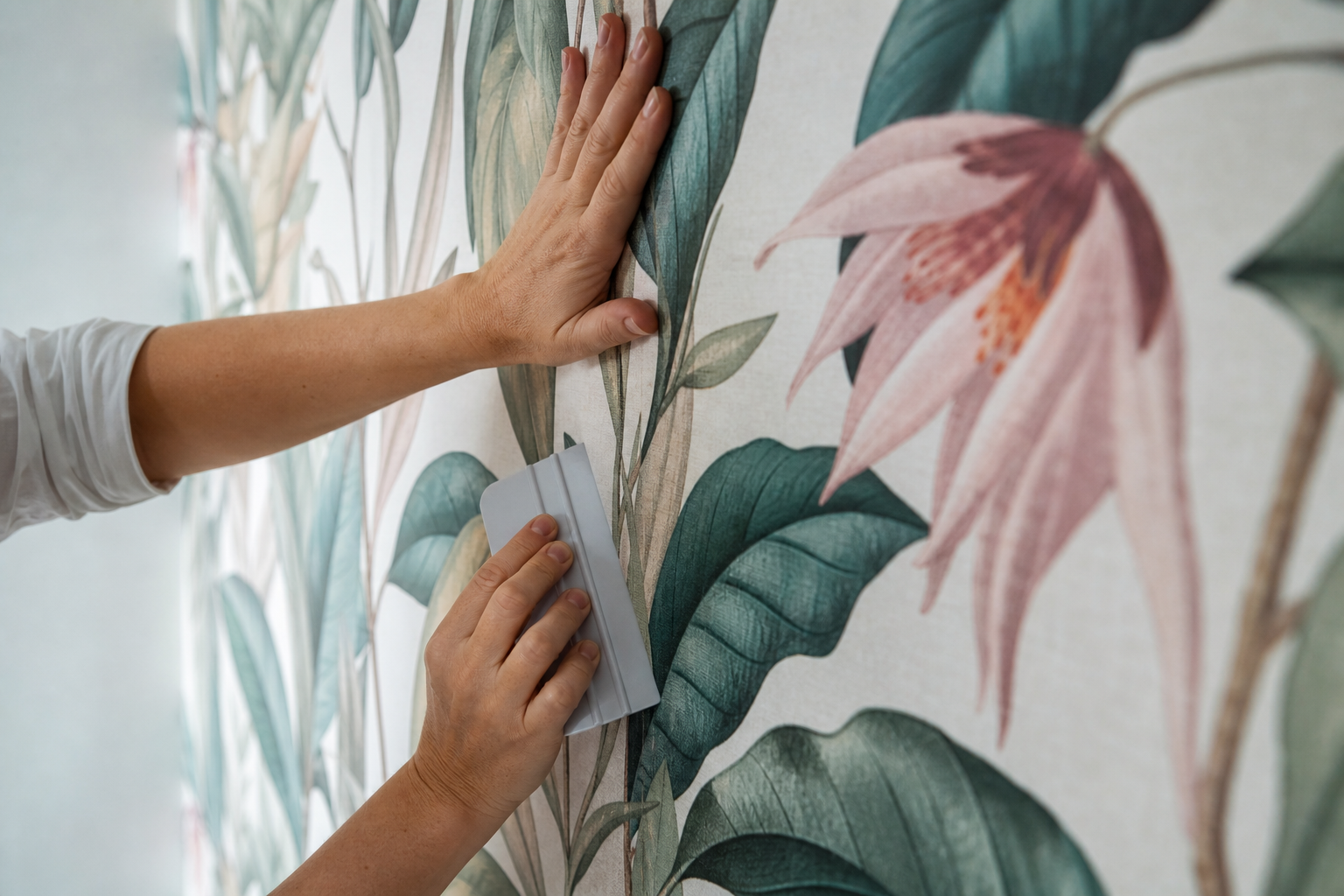
6. Wallpaper-mural alternative — removable printed wallpaper and adhesive panels
Concept: A removable wallpaper mural delivers a full-wall image but with less surface prep and reversible installation, making it ideal for leased spaces or short-term events.
Recommended print method: High-quality removable wallpaper or adhesive panels. These are a practical alternative when permanent adhesion is not allowed or when you want an inexpensive trial before committing to direct-to-wall printing.
Works best in: Rental properties, temporary event environments, and hospitality spaces testing a new look.
Surface and prep notes: Wallpaper requires a relatively smooth substrate for best adhesion. It is less durable than UV direct-to-wall printing for long-term heavy-traffic use, so treat it as a medium-term finish. Editorial guidance discusses wallpaper mural choices as part of the decision between material types CanvasArtRocks.
Site coordination tip: Confirm landlord or property approvals in writing and document the original wall condition to avoid disputes when removing the material.
-
7. Mixed-media feature — spot printed background with applied decals and signage
Concept: Combine a printed backdrop with applied vinyl, acrylic lettering, or 3D elements for layered depth. The printed background sets the scene while applied graphics add tactile or branded focal points.
Recommended print method: Use direct-to-wall UV printing for the background and secure applied elements separately. This hybrid approach preserves the finish quality of the background while allowing dimensional signage attachments.
Works best in: Brand showrooms, experiential retail, corporate culture walls, and feature counters where tactile branding is important.
Surface and prep notes: Applied elements need tested attachment points and backing reinforcement. Confirm that adhesives or fixings will not damage the printed surface if removals are planned.
Site coordination tip: Provide a detailed installation diagram and check all attachment tolerances on a small mock area before full installation.
How to preview and approve a printed feature wall: mockups, scale proofs and photo quotes
Previewing is the single most important decision step. Mockups include photo overlays that show artwork at scale, scaled CAD elevations, and physical swatches or printed sample strips. For high-traffic or hospitality projects, ask for a scaled mockup that includes colour notes and a close-up crop to inspect texture. Ink Blend emphasises mockups, scale notes and approvals in its process so clients see how a project will read before print Ink Blend and the studio notes the full direct to wall printing process for surface readiness direct to wall printing process.
Surface preparation and site coordination essentials
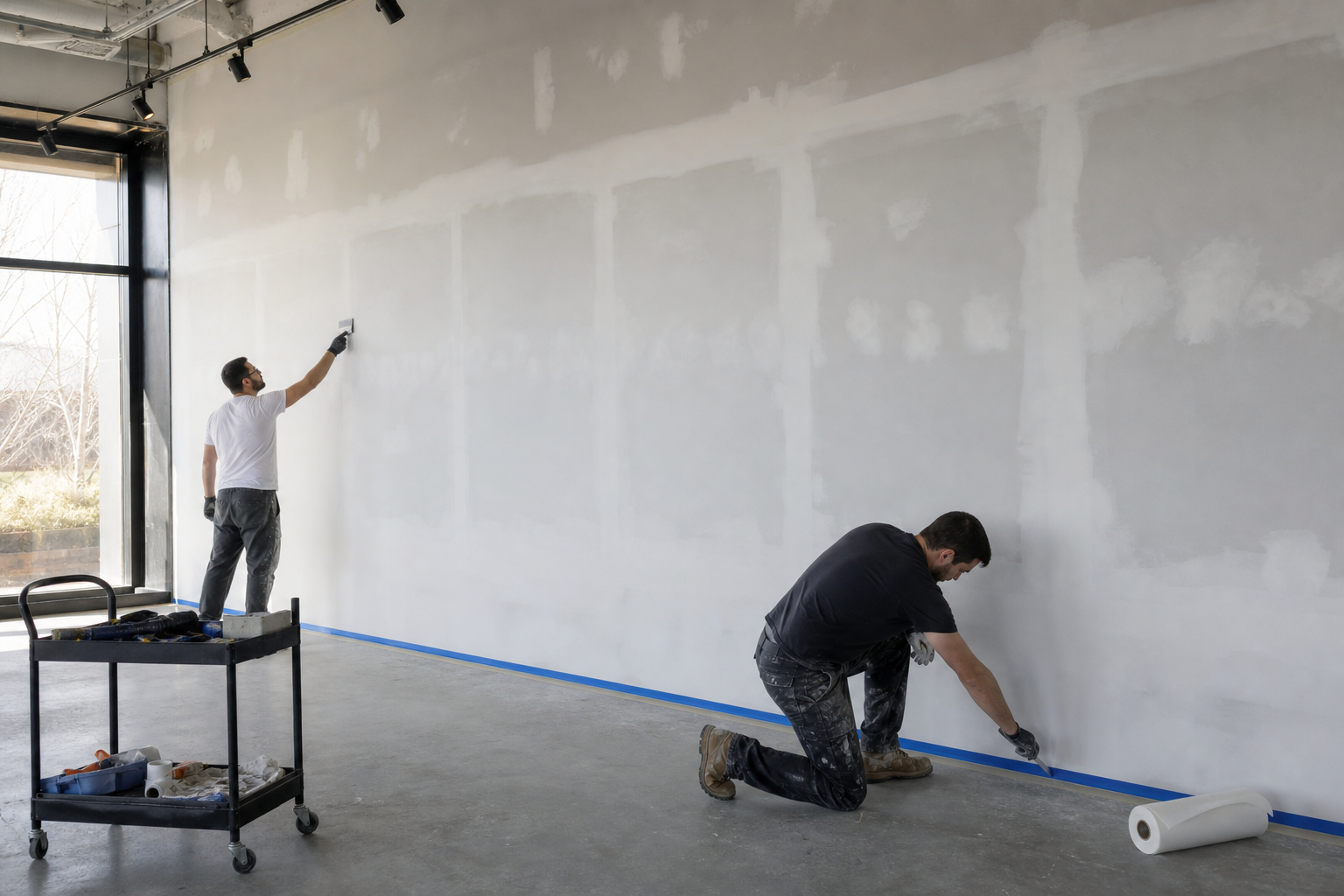
Before quoting, confirm these checks to avoid surprises: wall flatness, existing finish type, previous coatings, repaired patches, moisture or efflorescence risk, and any required primer. For leased or shared spaces, secure written approvals for hours of work and access to power. The studio workflow includes discovery, mockup, approval and on-site print steps to reduce risk and coordinate site access; review the direct to wall printing process for specifics direct to wall printing process.
Decision criteria and common objections to printed feature walls
- Choose direct-to-wall UV printing when permanence and high resolution matter.
- Choose printed panels when you need removability, repeatable panels, or lightweight mounting.
- Choose removable wallpaper when minimal prep and reversibility are priorities.
- Common objections include concerns about permanence, landlord permissions and odour. Address these by requesting sample swatches, documented approvals, and by clarifying the finish and removal expectations with your installer.
Local examples and next steps: how to request a quote from photos in Ontario
Ink Blend accepts projects across Ontario and Canada, including Toronto, Mississauga, Brampton, Vaughan, Markham, Oakville, Hamilton and Kitchener. To get a fast, practical estimate, send these items in one email or upload package:
- Clear photos of the wall from three distances, including at least one head-on shot.
- Measurements: wall width and height, and any nearby fixtures or obstructions.
- Notes on the existing finish and building rules, including landlord contact if approvals are needed.
- Brand files or high-resolution artwork where relevant, and a short note about viewing distance and expected use.
Use those materials to request a photo quote and mockup so you can compare the seven ideas above in situ. For more about how the studio prepares a site and prints directly to wall surfaces, see the direct to wall printing process direct to wall printing process and the Ink Blend homepage Ink Blend for service details.
Frequently asked questions
How do I get a fast quote from photos for a feature wall?
Send three clear photos including a head-on shot and a distance shot, the wall measurements, and any notes about surface finish or landlord requirements. Ink Blend uses photo- and measurement-based quoting to provide practical initial estimates and mockups; include your budget range if you want options tailored to cost constraints Ink Blend.
Which surfaces can you print on directly and which need panels or wallpaper?
Flat, primed drywall and smooth plaster are the best candidates for direct-to-wall UV printing. Textured or uneven walls often require smoothing, backer panels or printed panels for consistent results. Discuss the existing finish with your installer so they can recommend the least-invasive route.
How accurate are mockups for scale and colour before printing?
Mockups accurately show scale and composition. Colour accuracy improves when you request a printed swatch or a colour-calibrated proof. For brand-critical tones, ask for a physical sample or small test print to confirm final results.
Will UV direct-to-wall printing damage or permanently alter my wall?
Direct-to-wall UV printing bonds to prepared surfaces and is intended as a long-lasting finish. Removal can be disruptive, so discuss permanence and removal expectations with your installer and document the original wall condition if the space is leased.
What should a property manager ask before approving a printed feature wall?
Ask about surface preparation, proof of approvals, expected permanence, maintenance recommendations, and removal procedures. Request a mockup and a small sample to verify the finish before approving building-wide coverage.
Ink Blend offers photo- and measurement-based quotes, mockups, and a clear printing workflow to help you choose and preview feature wall printing ideas before installation.
Ready to discuss your wall? Contact Ink Blend to request a photo-based quote and a mockup for your project.